Manhattan Project: The Birth of the Atomic Age
The Manhattan Project was a pivotal U.S. initiative during World War II that successfully developed the first atomic bombs, significantly altering global politics and warfare. Key figures like J. Robert Oppenheimer and Leslie Groves played vital roles in its success, leading to technological advancements in nuclear physics and computing. However, the project’s ethical implications, including the devastating bombings of Hiroshima and Nagasaki, sparked ongoing debates about the responsibilities of scientists and the impact of nuclear weapons on civilians. Understanding the ramifications of the Manhattan Project remains essential in today’s conversations about nuclear disarmament and international relations.
Manhattan Project: a groundbreaking chapter in history where science met warfare, leading to unprecedented consequences. Have you ever considered how it shaped the modern world?
Overview of the Manhattan Project
The Manhattan Project was a secret United States project during World War II. It aimed to develop the first atomic bomb. The project started in 1942 and involved scientists from various fields. It was an immense undertaking that came with great challenges.
The Beginnings of the Project
The project began in response to fears that Nazi Germany might develop nuclear weapons. Scientists, including famous physicist J. Robert Oppenheimer, played key roles. They worked at several locations across the U.S., with the main lab in Los Alamos, New Mexico.
Key Locations
Apart from Los Alamos, other important sites included Oak Ridge, Tennessee, and Hanford, Washington. Oak Ridge focused on enriching uranium, while Hanford produced plutonium. These locations helped make the atomic bomb a reality.
Scientific Breakthroughs
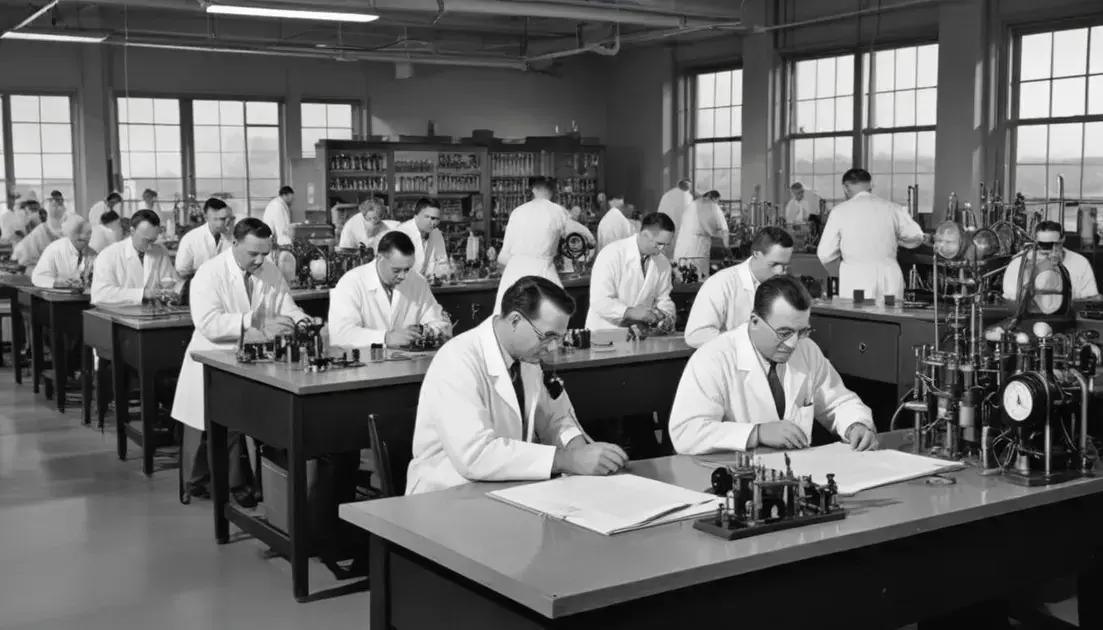
The project led to incredible advancements in nuclear physics. Teams developed methods to separate isotopes of uranium and created designs for atomic explosions. The collaboration sparked innovation in areas like chemistry, engineering, and physics.
The First Detonation
On July 16, 1945, the project reached a pivotal moment. The first atomic bomb was tested at Trinity Site in New Mexico. This event marked a turning point in warfare and science.
The success of the Manhattan Project forever changed the global landscape. The knowledge and technologies developed during this time are still influential today. Understanding this project’s history helps us reflect on the ongoing impact of nuclear weapons.
Key Figures Involved
Many important people contributed to the success of the Manhattan Project. Their work changed history and shaped the future. Some of these figures were scientists, engineers, and military leaders.
J. Robert Oppenheimer
Oppenheimer was the project’s scientific director. He guided many of the research efforts. His leadership was crucial to the project’s success. Often called the “father of the atomic bomb,” Oppenheimer played a major role.
Leslie Groves
General Leslie Groves was the military leader of the Manhattan Project. He oversaw the entire operation. Groves is credited with making important decisions about resources and logistics. His strong management helped keep the project on track.
Enrico Fermi
Fermi was a famous physicist and a key contributor. He led the team that created the first nuclear reactor. His work on neutron physics proved vital in developing the bomb.
Niels Bohr
Niels Bohr was a Nobel Prize-winning physicist. He offered valuable insights into atomic structure. His ideas were essential for understanding nuclear fission and helped guide the project.
Other Notable Contributors
Many other scientists made significant contributions, including Richard Feynman and Edward Teller. They focused on different parts of the project. Their teamwork made the impossible possible.
The collaboration among these brilliant minds led to groundbreaking discoveries. Their effort not only built the bomb; it also showcased the power of science and innovation.
Impact on World Politics
The Manhattan Project had a major influence on world politics. Its success changed the balance of power after World War II. The creation of atomic weapons brought both fear and respect.
New Balance of Power
With nuclear weapons, the United States emerged as a superpower. This shifted the dynamics of global politics. Other countries, like the Soviet Union, felt the need to develop similar weapons. This rivalry led to the Cold War.
The Arms Race
The race to build nuclear arsenals created great tension between nations. Countries invested heavily in their military capabilities. This resulted in many treaties aimed at controlling nuclear weapons.
Global Treaties and Agreements
In response to nuclear threats, nations began to sign treaties. The Nuclear Non-Proliferation Treaty was established in 1968. It aimed to prevent the spread of nuclear weapons and promote peaceful use of nuclear energy.
Long-Term Effects
The impact of the Manhattan Project still influences politics today. Countries continue to discuss nuclear disarmament and non-proliferation. Understanding these issues helps us see the consequences of atomic power.
The project not only changed military strategies but also sparked debates about ethics and responsibility. The fear of nuclear war remains a topic in international relations.
Technological Advancements
The Manhattan Project led to many important technological advancements. The research and development process was groundbreaking. It introduced new methods and tools that changed science and engineering.
Innovations in Nuclear Physics
During the project, scientists made significant discoveries in nuclear physics. They figured out how to split atoms, a process called nuclear fission. This idea became the foundation for atomic energy.
Development of Computing Technology
The Manhattan Project also drove advances in computing. Engineers created early computers to handle complex calculations. These machines helped design nuclear weapons and analyze data efficiently.
Instrumentation and Measurement Techniques
New instruments were developed to measure radiation and understand nuclear reactions. Scientists relied on precise measurements for experiments. This led to better safety protocols in handling radioactive materials.
Engineering Solutions
Engineers faced challenges like building large reactors and bomb designs. Their creative solutions paved the way for modern engineering practices. Many methods used then are still applied in current engineering tasks.
The technological advancements from the Manhattan Project have had lasting effects. They contributed to fields beyond nuclear science, like medicine and energy. Innovations in radiology and cancer treatment stem from this research.
Ethical Considerations
The Manhattan Project raised many ethical concerns that are still important today. The development of atomic weapons brought serious moral questions. Scientists and leaders had to think about the consequences of their work.
The Responsibility of Scientists
Scientists involved in the project faced a tough dilemma. They wanted to end the war quickly but also feared the potential misuse of atomic bombs. Many wrestled with the idea of creating such destructive power.
Impact on Civilians
The bombings of Hiroshima and Nagasaki caused massive civilian casualties. These events sparked debates about the ethics of using atomic weapons. Was it right to target cities, knowing many innocent people would suffer?
Long-Term Effects
Nuclear weapons changed the nature of warfare and global politics. The fear of nuclear conflict still influences today’s choices. Nations must balance security and moral responsibility.
Global Disarmament Efforts
In response to nuclear threats, countries began discussing disarmament. Treaties like the Nuclear Non-Proliferation Treaty aim to prevent the spread of nuclear weapons. These efforts show a collective desire to promote peace and safety.
The ethical considerations surrounding the Manhattan Project remind us of the need for caution. As technology advances, we must think about the impact of our actions on humanity.
Conclusion
In conclusion, the Manhattan Project not only changed warfare but also shaped modern science and ethics. Its technological advancements brought forth powerful weapons but raised serious moral questions. We must remember the lessons learned from its history.
The impact on world politics is still felt today, influencing global relations and treaties. As we move forward, it’s crucial to consider the ethical responsibility that comes with scientific progress. Balancing innovation with care can help ensure a safer future for all.