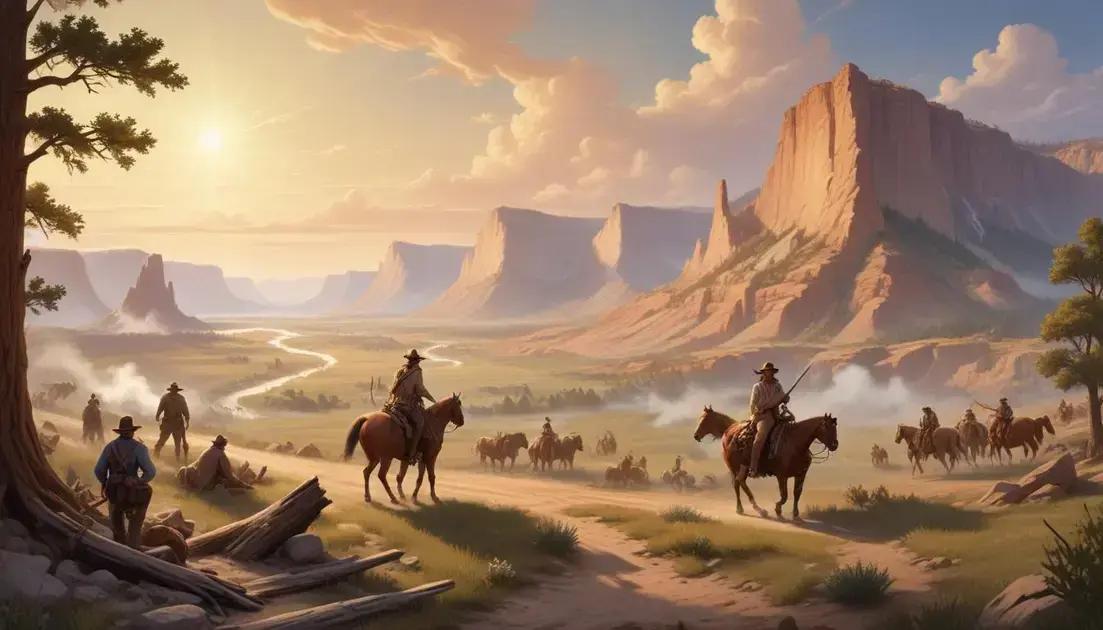
Manifest Destiny: the idea that shaped America
Manifest Destiny was a significant belief in the 19th century that pushed for the westward expansion of the United States. It shaped the nation’s identity, fueled American exceptionalism, and resulted in cultural changes, conflicts with Native American tribes, and territorial acquisitions like Texas and California. While it opened new opportunities and land, it also created lasting impacts on indigenous communities and American culture that are still felt today.
Have you ever wondered how a single belief, Manifest Destiny, could shape an entire nation’s future? This deep-rooted idea not only fueled westward expansion but also ignited conflicts that defined America’s landscape and culture.
Understanding Manifest Destiny
Manifest Destiny was a powerful belief that changed America in the 19th century. It suggested that the United States was destined to expand across the continent. This idea inspired many people to move westward in search of new opportunities.
Many pioneers believed they had a right to the land. They thought they were bringing progress and civilization to the “wild” areas. However, this expansion often led to conflicts with Native American tribes.
In this time, the phrase “from sea to shining sea” became popular. It reflected the dream of a nation stretching across North America. The impact of this idea can still be seen today in how America is shaped.
Some people saw Manifest Destiny as a call to spread democracy. They believed it was their duty to share their way of life. However, this belief also resulted in the suffering of many indigenous peoples.
Overall, understanding Manifest Destiny is about seeing both sides of history. It includes the drive for expansion and the consequences that came with it. This idea wasn’t just about land; it also changed the lives of many.
Historical Context and Impact
The historical context of Manifest Destiny is crucial to understanding its impact. In the early 1800s, America was expanding. The population was growing, and many people wanted to move west for land and opportunities.
This period was marked by the idea that Americans were chosen to spread their values. Many believed it was their duty to bring progress to new territories. This belief created a sense of excitement and purpose.
As settlers moved west, conflicts with Native Americans increased. The government often pushed Native tribes off their land. This led to many struggles and suffering for these communities.
Major events, like the Louisiana Purchase in 1803, fueled the drive for expansion. This deal doubled the size of the United States and opened up many lands to explore. Additionally, the discovery of gold in California in 1848 attracted countless people hoping for wealth.
The consequences of Manifest Destiny were not only physical but also cultural. The belief reshaped America’s identity, leading to a nation united in its expansion efforts, even if it meant conflicts.
Conflict and Expansion
Conflict and expansion were key themes during the time of Manifest Destiny. As settlers moved west, they often clashed with Native American tribes. These groups had lived in these lands for generations.
Many settlers believed they had a right to the land. They thought they could improve it and spread their way of life. However, this often meant taking land from Native Americans. As a result, numerous conflicts arose.
One major event was the Trail of Tears, which forced many Native Americans from their homes. This painful journey resulted in thousands of deaths. It’s a tragic example of how expansion affected indigenous communities.
Another conflict resulted from the Mexican-American War, starting in 1846. America wanted to expand its territory, which led to tensions with Mexico. The war ended with the Treaty of Guadalupe Hidalgo in 1848. As a result, the U.S. gained vast areas of land, including California and Texas.
This growth changed the nation dramatically. It created new opportunities, but also left scars. The conflicts over land shaped American history and the relationships between different groups.
Cultural Implications
The cultural implications of Manifest Destiny are wide-ranging and significant. As Americans moved west, they brought their traditions and values with them. This expansion often led to the spread of American culture.
One major impact was the idea of American exceptionalism. Many settlers believed their way of life was superior. They thought it was their duty to spread these values to others. This belief sometimes came at the expense of native cultures.
As settlers impacted indigenous communities, they often dismissed local customs. This led to cultural clashes and the loss of many Native traditions and languages. These changes still affect native populations today.
Moreover, the push for westward expansion affected art and literature. Many writers and artists celebrated the journey and the rugged spirit of pioneers. This new identity was captured in paintings, novels, and songs.
The impact of Manifest Destiny also shaped the idea of the American Dream. The belief that hard work could lead to success became deeply rooted in American culture. This dream motivated many people to seek lives in new lands.
Legacy of Manifest Destiny
The legacy of Manifest Destiny is complex and far-reaching. This belief shaped the United States in many ways, leaving a lasting impact on the nation. One major effect was the expansion of territory.
Through Manifest Destiny, the U.S. grew rapidly. New states and lands were added, greatly changing the map of America. This expansion also led to more diverse cultures in different regions.
Another legacy is the ongoing effects on Native American populations. The push for land often resulted in their displacement and struggles. Many Native tribes lost their homes and traditions, creating long-lasting pain for their communities.
Moreover, Manifest Destiny contributed to the idea of American exceptionalism. This belief shaped how Americans view themselves. It suggests the U.S. has a special mission to lead and influence the world.
Finally, the impacts of Manifest Destiny are seen in modern politics and society. The belief continues to influence discussions about land, culture, and identity. Understanding this legacy helps us see the effects of these historical beliefs today.
Conclusion
In conclusion, Manifest Destiny played a key role in shaping the United States. This belief drove expansion and changed the nation forever. However, it also led to conflicts and challenges that many still feel today.
As we explore this history, we see both the achievements and the pain that came with it. Understanding Manifest Destiny helps us appreciate America’s journey while recognizing the impact on Native American communities and cultures.
Today, the legacy of Manifest Destiny continues to influence how we view ourselves and our role in the world. By learning from the past, we can create a better future that honors all voices and experiences in our diverse nation.