Maya: The Astronomers of the Ancient Americas
The Maya civilization is celebrated for its advanced contributions to art, astronomy, mathematics, and agriculture. They developed complex calendar systems that influenced their rituals and agricultural practices. Their architectural marvels, such as aligned temples, showcased their astronomical knowledge. Today, the cultural impact of the Maya is still seen in various fields, inspiring sustainable practices and artistic expressions that honor their rich heritage.
Did you know that the Maya were not just skilled builders but also brilliant astronomers? Their calendars and architectural designs reveal a deep understanding of the cosmos. Dive into the fascinating world of Maya astronomy!
The astronomical knowledge of the Maya
The ancient Maya had impressive astronomical knowledge. They looked at the stars and planets to guide their lives. Their observations led to amazing developments in calendars and navigation.
The Mayan Calendar
The Maya created a complex calendar system. There were two main calendars: the Tzolk’in, a 260-day ritual calendar, and the Haab’, a 365-day solar calendar. These calendars helped them plan agricultural activities and religious events.
Observatories and Structures
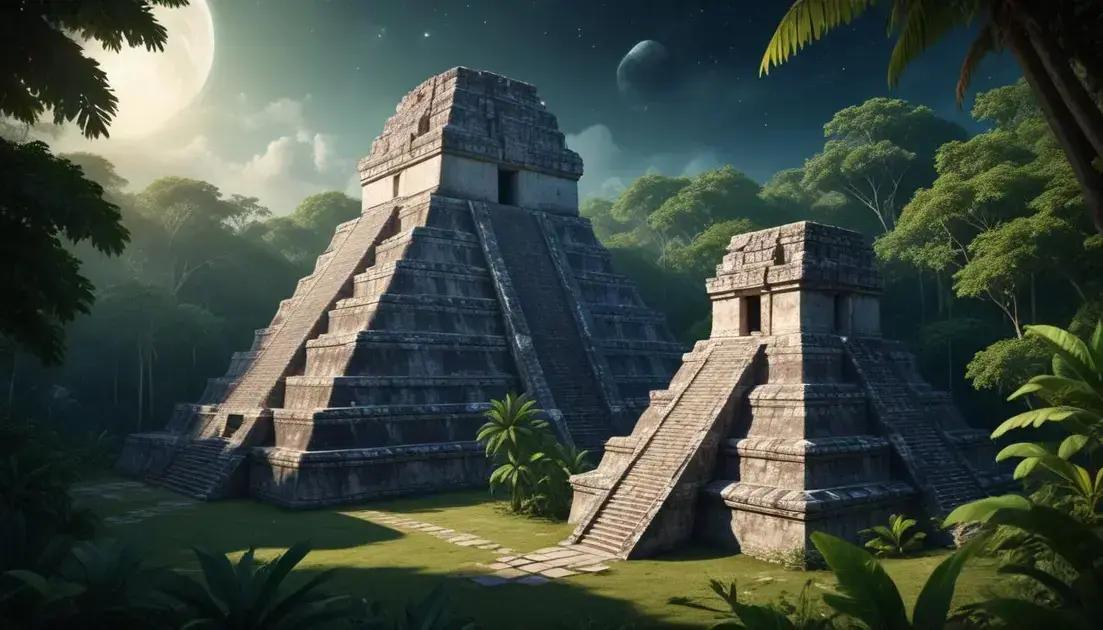
Mayan cities had structures like observatories. These places allowed them to track celestial movements. For example, the pyramid at El Castillo in Chichén Itzá shows their understanding of the equinoxes.
Tracking Celestial Events
The Maya observed various celestial events like eclipses. They used this knowledge to predict changes in the seasons. This helped them time their planting and harvesting effectively.
The Role of Astronomy in Society
Astronomy was essential in Mayan society. It influenced their mythology and rituals. The movements of stars and planets were believed to affect earthly events.
Understanding the cosmos was not just science; it was a part of their culture. Their knowledge was shared across generations, making their astronomy a vital part of their legacy.
Calendar systems and their significance
The Maya used two key calendar systems. These were crucial for their daily life and rituals. The Tzolk’in is a 260-day calendar. It helped track religious ceremonies and festivals.
The Haab’ Calendar
The Haab’ is a solar calendar with 365 days. It marked the agricultural year. Farmers used it to know when to plant and harvest crops. Together, these calendars kept time accurately.
How Calendars Shaped Society
The calendars influenced many aspects of Mayan life. They determined when to hold ceremonies. They also guided rulers in making important decisions.
People believed that time was connected to the cosmos. Therefore, following the calendars was essential for harmony and order.
Calendars and Astrology
Astronomy played a big part in their calendars. The Maya observed the stars to align their calendars with lunar and solar events. This precision shows their advanced understanding of the universe.
By using these systems, the Maya maintained a rich culture that celebrated cycles of nature and the divine. Their calendar systems become a way to connect the earthly and celestial worlds.
Architectural marvels and astrological alignments
The Maya were known for their stunning architecture. Their buildings weren’t just for everyday use; they also served a spiritual purpose. Many structures, like temples and pyramids, were carefully aligned with the stars and seasons.
Temples as Observatories
Temples were often built to observe celestial events. For example, in Chichén Itzá, the famous pyramid called El Castillo connects with the sun during equinoxes. At certain times, it looks like a serpent is slithering down its stairs.
City Layout and Stars
The layout of Mayan cities reflected their astronomical knowledge. Streets and buildings were positioned to align with special celestial events. This alignment was important for their religious practices.
Symbolism in Architecture
Mayan architecture was rich with symbolism. Structures represented their gods and the cosmos. The way they designed their cities shows how important astronomy was to their culture.
Visitors today can still see these incredible structures. They tell us about the connection the Maya had with the universe. Their architectural skills and understanding of astronomy were truly remarkable.
Mathematics in Mayan society
The Maya were masters of mathematics. They created a number system that was very advanced for their time. Their main numbers were 1, 2, 3, and 5, but they also used a symbol for zero.
The Mayan Number System
Their number system was a base-20 system. This means they counted using multiples of twenty. They wrote numbers using dots and bars. Dots represented one, while bars represented five.
Calendars and Mathematics
The Mayans used math to create calendars. They calculated the cycles of the moon and the sun. Their understanding allowed them to predict events like eclipses.
Mathematics in Daily Life
Math was important in daily Mayan life. Farmers used it to calculate planting and harvesting times. Merchants used math for trade and to measure goods.
Even in their architecture, math played a critical role. The calculations they made for their buildings showed their mathematical skills. The engineering behind their structures was impressive and precise.
Cultural impact and relevance today
The Maya culture still has a strong impact today. Many people admire their achievements in art, astronomy, and agriculture. Their ancient knowledge inspires modern societies, especially in sustainable practices.
Art and Design Influence
Mayan art, like pottery and murals, continues to inspire artists worldwide. Their colorful designs and themes often reflect nature and spirituality. You can see these influences in contemporary jewelry and textiles.
Astronomical Wisdom Today
The Mayans’ understanding of the stars and planets is fascinating. Today, scholars study their astronomical skills. This knowledge helps us learn about ancient navigation and timekeeping.
Sustainable Agriculture Practices
Their farming techniques, like crop rotation and companion planting, are still relevant. Many farmers today use these methods to improve soil health and yield. This shows how their practices can lead to sustainable farming.
Museums and educational programs continue to share Mayan history. This helps new generations appreciate their rich heritage. Their legacy lives on through celebrations, stories, and ongoing research. Understanding the Maya helps us appreciate human creativity and adaptability.
Conclusion
In conclusion, the achievements of the Maya continue to inspire us today. Their skills in astronomy, mathematics, and art show how advanced their society was. This rich legacy provides valuable lessons we can learn from, especially in sustainability and cultural appreciation.
Their contribution to calendars and architectural designs reflects their deep connection to the cosmos. By studying the Maya, we not only celebrate their history but also connect with our own culture and traditions.
As we preserve and share their story, we can find new ways to integrate their wisdom into our modern lives. Ultimately, the Mayan influence reminds us of human creativity and the importance of understanding our past to shape a better future.