Nuclear Diplomacy: Treaties to Avoid the End
Nuclear diplomacy aims to reduce threats and promote global stability through treaties and open dialogue among nations. Key treaties, such as the Nuclear Non-Proliferation Treaty (NPT), focus on arms control and cooperation to prevent nuclear conflict. The future of these treaties relies on verification measures, arms reduction, and engaging younger generations. By fostering communication and trust, nations can work towards a safer world, adapting to new challenges while ensuring compliance with established agreements.
Nuclear Diplomacy plays a crucial role in preventing global chaos. Have you ever wondered how treaties can stabilize relationships between adversaries? This article explores that very question and more!
Understanding Nuclear Diplomacy
Understanding Nuclear Diplomacy is vital in today’s world. It involves the relationships between nations regarding nuclear weapons. Through talks and treaties, countries can reduce the threat of nuclear conflict.
Many countries have faced tensions over nuclear capabilities. But through diplomacy, they seek peace and stability. For example, the treaty signed in 1968 known as the Nuclear Non-Proliferation Treaty (NPT) aimed to prevent the spread of nuclear weapons.
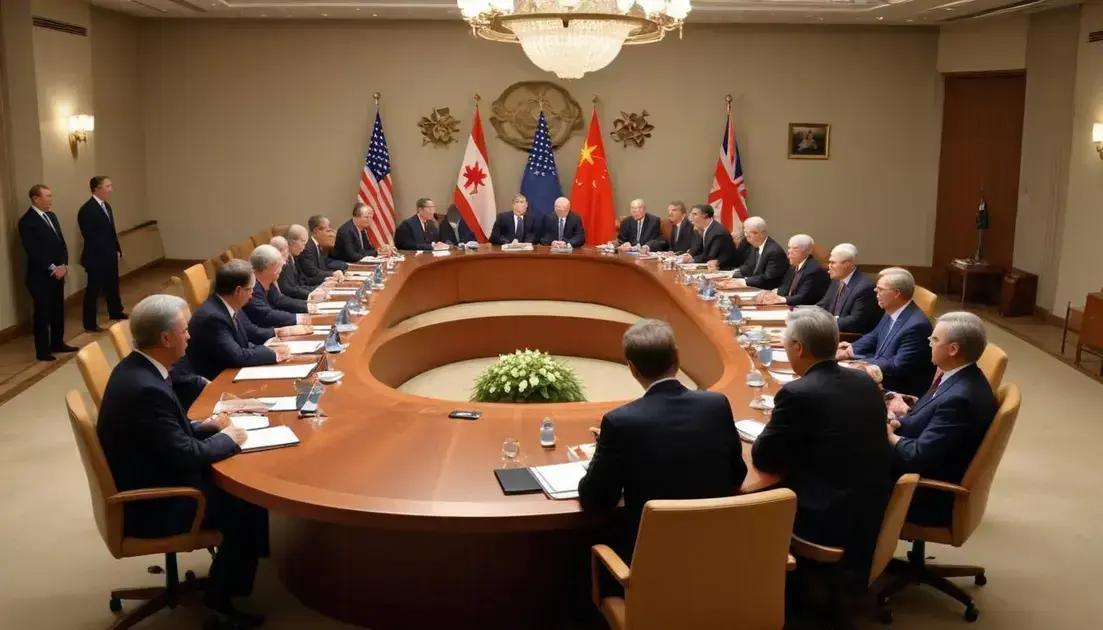
Countries involved in nuclear diplomacy often hold discussions to address fears and build trust. This dialogue can help resolve conflicts without resorting to violence. By engaging in nuclear talks, nations showcase their commitment to global safety.
During these discussions, nations share their concerns and negotiate terms. Sometimes, they agree on limits for nuclear arsenals or promote disarmament. This cooperation helps create a framework to manage risks and promotes understanding.
In recent years, major powers like the USA and Russia have taken notable steps to reduce their nuclear stockpiles. These actions illustrate how nuclear diplomacy can lead to positive changes.
Overall, understanding nuclear diplomacy highlights the importance of communication. Through cooperation, countries can work towards a safer world.
Key Treaties in Nuclear History
Key Treaties in Nuclear History have shaped our world in many ways. Treaties are agreements between countries. They aim to limit or reduce nuclear weapons. These deals help promote global peace and security.
One of the most important treaties is the Nuclear Non-Proliferation Treaty (NPT). Signed in 1968, the NPT seeks to stop the spread of nuclear weapons. It encourages nations to share nuclear technology for peaceful purposes.
Another vital agreement is the Strategic Arms Reduction Treaty (START). START was first signed in 1991 between the United States and Russia. It focused on reducing the number of strategic nuclear warheads.
The Comprehensive Nuclear-Test-Ban Treaty (CTBT) also plays a key role. This treaty, which aims to ban all nuclear explosions, was opened for signature in 1996. Although not yet in force, many countries support it.
Additionally, the Joint Comprehensive Plan of Action (JCPOA) created a framework to limit Iran’s nuclear program. This agreement was made in 2015 and aimed to ensure that Iran’s nuclear activities are peaceful.
Each of these key treaties has had a significant impact on our global approach to nuclear weapons. They demonstrate how nations can work together to promote safety and stability.
Impact of Treaties on Global Stability
Impact of Treaties on Global Stability is crucial for understanding how nations interact. Treaties can play a huge role in reducing tensions. They help countries communicate and build trust.
When nations sign treaties, it sets a clear direction for peaceful relations. For instance, the Nuclear Non-Proliferation Treaty (NPT) has encouraged many countries to limit their nuclear arms. This reduces the risk of nuclear conflict and promotes stability.
Moreover, treaties often include verification measures. These measures help ensure that countries follow the rules. Monitoring compliance builds confidence among nations.
Additionally, treaties can foster cooperation on other issues, like trade and environment. When countries work together on multiple fronts, it strengthens their relationships. This helps maintain peace and understanding.
The effects of treaties can be seen in different regions. For example, countries in Europe have benefited from various agreements. These agreements have kept tensions low and peace high for decades.
In summary, the impact of treaties on global stability is significant. They create frameworks for dialogue and cooperation. By working together through treaties, countries can prevent conflicts and promote a safer world.
The Role of Dialogue in Conflict Resolution
The Role of Dialogue in Conflict Resolution is essential for promoting peace. When countries face issues, talking can often solve problems. Open communication helps build trust and understanding.
Dialogue creates a space for nations to express their concerns. For instance, countries can share their views on nuclear weapons, leading to better cooperation. This open exchange allows for different perspectives to be heard.
Moreover, dialogue often involves negotiations. In these talks, nations work together to find common ground. Compromise is key to reaching agreements that benefit everyone involved.
Successful dialogues can lead to significant treaties. These treaties help to outline clear agreements and expectations. By laying down rules, they reduce the chances of conflicts escalating.
Additionally, long-term dialogue builds relationships. When countries keep lines of communication open, it creates a foundation for future cooperation. This proactive approach promotes ongoing peace efforts.
In summary, dialogue is a powerful tool in conflict resolution. It encourages understanding and peaceful solutions. By focusing on communication, countries can prevent conflict and foster harmony.
Future of Nuclear Treaties
Future of Nuclear Treaties will shape global security in important ways. As new threats emerge, countries must adapt their approaches. Treaties are vital for managing nuclear risks and promoting stability.
One key aspect of future treaties is verification. Nations will need to ensure compliance through strict monitoring. This builds trust and encourages countries to follow through on their commitments.
Additionally, countries might focus more on arms reduction. Global efforts to reduce the number of nuclear weapons can help maintain peace. Treaties that limit arms will be essential for minimizing potential conflicts.
Furthermore, engaging younger generations is vital. Future leaders must understand the importance of nuclear diplomacy. Education on these topics will promote awareness and encourage informed discussions.
Another trend is the inclusion of non-state actors. Organizations and activists can play a role in shaping nuclear discussions. Their perspectives can influence policy and help foster broader support for treaties.
In the coming years, adapting to changes in technology will also be important. Innovations in military capabilities could challenge existing treaties. Finding new solutions will be crucial for effective diplomacy.
Conclusion
In conclusion, the future of nuclear treaties is vital for global security. Engaging in dialogue and building trust among nations can reduce tensions. Key treaties will help manage nuclear risks and promote lasting peace.
As technology evolves, countries must adapt their approaches to stay effective. Strong verification measures and arms reduction efforts are essential for ensuring compliance.
Moreover, involving younger generations and non-state actors will broaden support for nuclear diplomacy. By fostering understanding and cooperation, we can pave the way for a safer world.
Finally, adapting to new challenges while remaining committed to peace will be crucial. The path ahead may be complex, but focused efforts on nuclear treaties can lead us to a more stable future.