Opium Wars: the clash that opened China to the West
The Opium Wars were pivotal conflicts in the 19th century that reshaped China and its global interactions. These wars led to significant trade changes, the opening of Chinese ports to foreign powers, and marked a decline in the Qing Dynasty’s control. The consequences included social unrest, a shift in international relations, and lasting effects on global trade dynamics that are still felt today. Understanding this history highlights the importance of national sovereignty and the challenges posed by foreign influences.
Ready to dive into the fascinating world of the Opium Wars? These conflicts didn’t just shape China—they transformed the entire global landscape. Join us as we explore how this clash opened China to the West and forever changed trade dynamics.
Introduction to the Opium Wars
The Opium Wars were two conflicts that took place in the mid-1800s. These wars involved China and Western powers, mainly Britain. The roots of the wars lay in trade and the opium trade specifically. Opium was a drug produced from poppies. It was addictive and many people in China fell into its grip. This led to serious social issues.
Britain had an interest in selling opium in China. They wanted to balance trade because they bought goods like tea, silk, and porcelain, but they sold almost nothing in return. As a result, they smuggled opium into China to create a demand.
China tried to stop the opium trade as it was hurting its society. The Chinese government took strong action against traders. They confiscated opium and even destroyed it. This made the British upset. It was one of the main reasons for the outbreak of the first Opium War in 1839.
During the conflict, British forces used their superior military strength. They had better ships and weapons. The war ended in 1842 with the Treaty of Nanking. This treaty gave Britain large concessions, including control over Hong Kong and expanded trade rights.
The second Opium War began in 1856. Again, Britain, joined by France, sought more trade benefits. They used military action to force China to open more ports and permit foreign trade. This war ended in 1860 with more treaties that favored Western powers.
These wars marked a significant turning point in China’s history. They weakened the Qing Dynasty and opened China to greater foreign influence. The Opium Wars set the stage for the dramatic changes that would follow in China’s society and governance.
Key Events and Battles
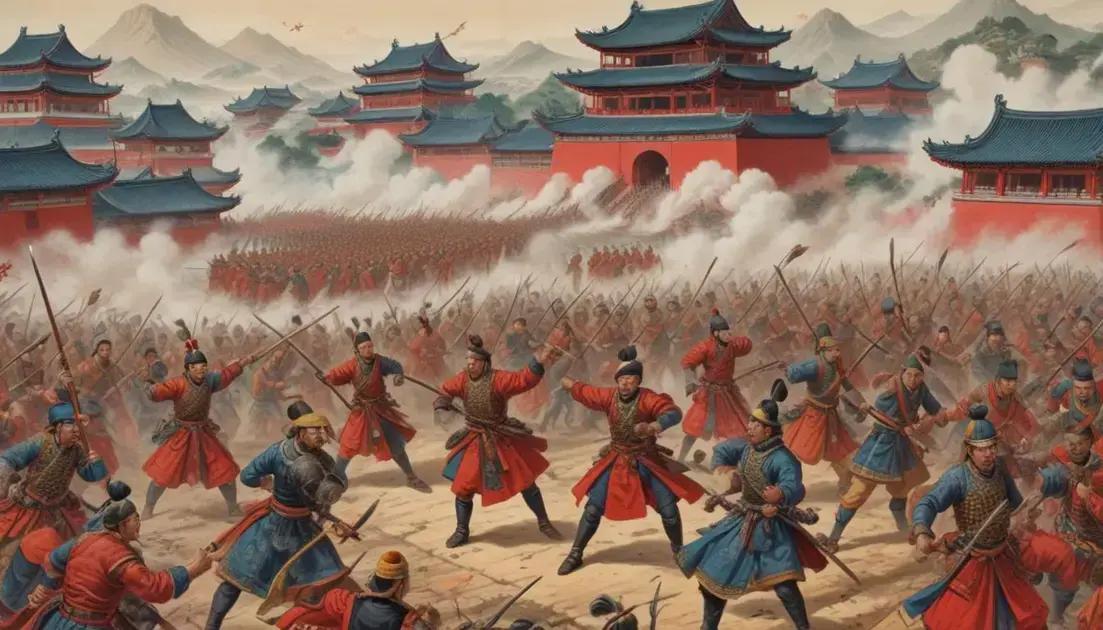
During the Opium Wars, several key events and battles shaped the conflict. These events showed the struggle between China and the British Empire. The first main conflict was the First Opium War, which started in 1839. It began when the Chinese seized and destroyed a large amount of opium. The British didn’t take this lightly, and the war quickly escalated.
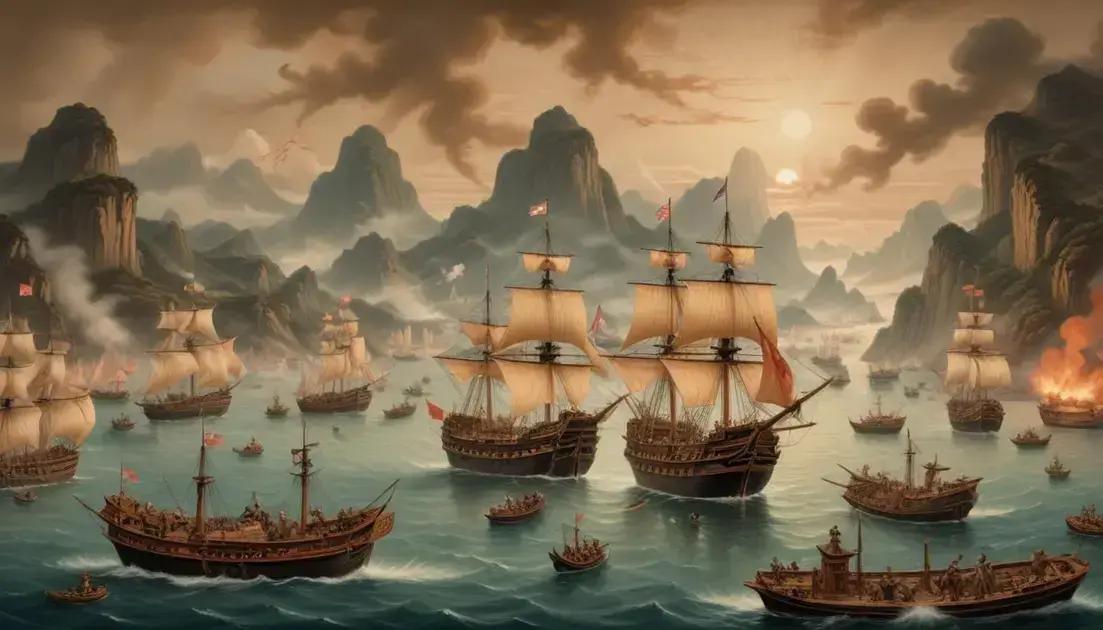
One major battle was the Battle of Canton in 1841. British forces used their advanced ships and weapons against the Chinese. This battle showed the strength of British naval power. Following this, the British captured Guangzhou, forcing China to start negotiations.
Another significant event was the signing of the Treaty of Nanking in 1842. This treaty ended the First Opium War. It forced China to open five ports to British trade and cede Hong Kong to Britain. This loss marked a turning point for China, impacting its sovereignty.
The Second Opium War began in 1856, and it was driven by heightened tensions and British desires for more trade rights. One important battle during this war was the capture of Beijing in 1860. The British and French forces marched into the city, causing great destruction.
After the Second Opium War, multiple treaties further weakened China’s power. The Treaty of Tientsin was signed, opening more ports and allowing foreign legations in Beijing. These treaties changed the face of China’s international relationships forever.
These key events and battles played a crucial role in establishing Western dominance in Asia. The effects of the Opium Wars are still felt in modern China, impacting trade and diplomatic relations.
Impact on China
The Opium Wars had a deep impact on China, changing its social and political landscape. First, these wars showed the weakness of the Qing Dynasty. They struggled to defend against foreign powers. This weakened public confidence in the government.
Another key effect was the opening of Chinese ports to foreign trade. The Treaty of Nanking in 1842 and later treaties forced China to accept terms that favored foreign nations. As a result, British and other Western merchants flooded into China, changing local economies.
The influx of foreign goods disrupted local industries. Traditional crafts and businesses suffered as cheap imported goods became available. This led to job losses and increased poverty in some areas, hurting many families.
In addition, these conflicts led to social unrest. Many Chinese people were unhappy with how foreign powers treated their country. This discontent brewed resentment. It contributed to various uprisings, including the Taiping Rebellion, which deeply affected the population.
The Opium Wars also changed China’s diplomatic stance. China went from being an isolated empire to a nation facing global powers. This shift diminished China’s sovereignty and forced it to engage more with other countries.
Overall, the long-term consequences of the Opium Wars laid the groundwork for the modernization efforts that followed. They highlighted the need for reform in China, influencing future leaders and movements seeking to restore national strength.
Consequences for Global Trade
The Opium Wars had significant consequences for global trade. These conflicts redefined trade routes and regulations. They opened China to Western markets, changing the landscape of international commerce.
After the wars, China had to accept many unfair treaties. The Treaty of Nanking in 1842 was one of the first. It forced China to open five ports for British trade. This marked the beginning of China’s integration into the global economy.
Foreign powers gained more control over trade practices. They established trading rights that favored them and made it hard for local businesses to compete. As a result, Western goods flooded the Chinese market.
This opened up new opportunities for Western companies. They sold a variety of products like textiles, machinery, and other goods in China. Conversely, Chinese exports struggled to keep up with demand, leading to trade imbalances.
These trade imbalances created tension in international relations. Countries like the United States began to demand similar trade rights. They wanted to benefit from the lucrative Chinese market. This demand for access led to more diplomatic discussions and engagements.
Furthermore, the Opium Wars set a precedent for future conflicts. Other nations wanted their own share of the Asian market, leading to further exploitation. The events during this time laid the groundwork for Western imperialism in Asia.
Overall, the Opium Wars changed how nations interacted in global trade. They reshaped economic policies and created lasting impacts on trade across continents.
Legacy of the Opium Wars
The legacy of the Opium Wars is still felt in modern China and beyond. These wars changed how China interacted with the world. They marked a turning point for Chinese sovereignty and led to a series of reforms.
One significant impact was the weakening of the Qing Dynasty. This decline sparked calls for change. Many people began to demand a stronger government that could defend against foreign influences.
These events also led to social unrest in China. The humiliation from the wars fueled feelings of nationalism. Many Chinese felt angry about foreign control. This sentiment eventually contributed to movements aimed at reforming and modernizing China.
Economically, the Opium Wars opened China to foreign trade. However, it also made local industries struggle. The influx of foreign goods disrupted traditional economies. This challenge highlighted the need for China to reform its economic policies.
In addition to trade, the Opium Wars influenced international relationships. They set a precedent for Western powers to engage aggressively with Asian nations. Countries like Japan also looked closely at these events when deciding how to interact with the West.
The Opium Wars led to significant treaties that favored foreign interests. These agreements continued to shape China’s interactions long after the wars ended. The unequal treaties became a symbol of foreign domination and a rallying point for nationalists.
Today, the legacy of the Opium Wars is a complex topic. They remind us of the impacts of colonialism and trade. Understanding this history helps us appreciate the challenges that shaped modern China.
Conclusion
In conclusion, the Opium Wars had lasting effects on China and the world. They marked a time when foreign powers forced change upon China, leading to struggles for sovereignty and national pride. These conflicts reshaped trade, influenced social movements, and sparked calls for reform.
Understanding the legacy of the Opium Wars helps us see how history shapes nations today. The lessons learned from this period remind us of the importance of independence and mutual respect between countries. By looking back, we can appreciate the progress made and recognize the challenges that are still relevant in our global society.