Pacific War: island battles and global strategy
The Pacific War was a significant conflict occurring from 1941 to 1945 between the United States and Japan, marked by pivotal battles and strategic developments. Key events included the Battle of Midway and the use of island hopping, which changed military tactics. The war significantly influenced global politics, leading to the U.S. emerging as a superpower and altering relationships in Asia. It also set the stage for the Cold War and inspired decolonization movements. The lasting legacy of the Pacific War remains relevant, impacting how nations interact today and honoring the sacrifices of veterans involved in this major historical event.
Have you ever wondered how the Pacific War transformed not just the region, but the entire world? Join us as we delve into this epic conflict that shifted balance and power across oceans.
Overview of the Pacific War
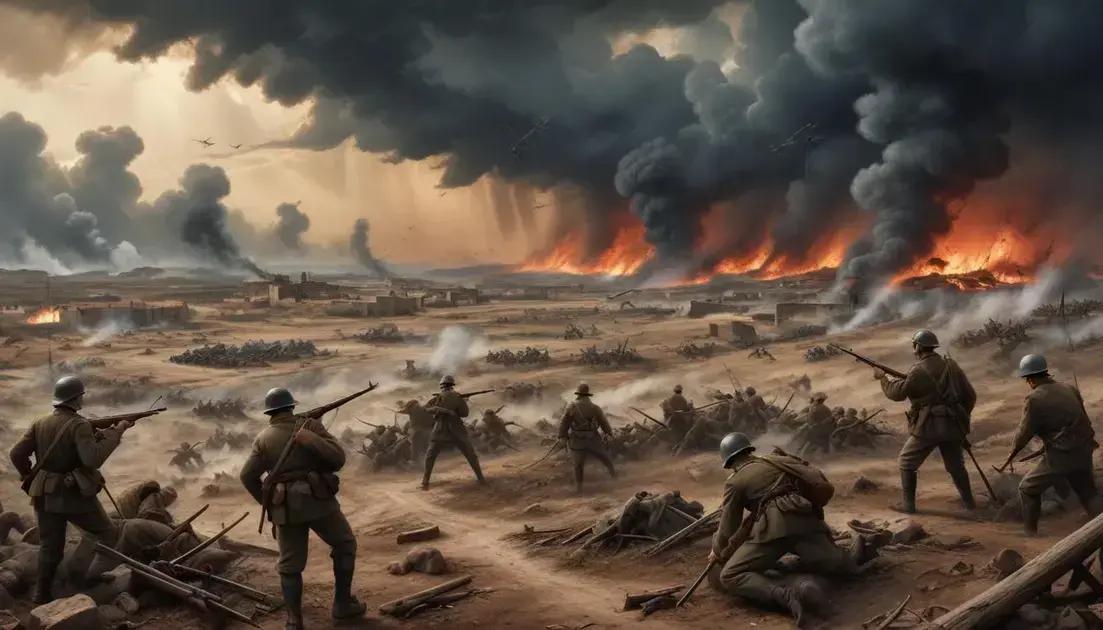
The Pacific War was a major conflict occurring between 1941 and 1945, mainly between the United States and Japan. It started after Japan attacked Pearl Harbor, which is a U.S. naval base in Hawaii. This attack led the U.S. to join World War II. The war stretched across the vast Pacific Ocean, with battles fought on many islands.
Both sides had different goals. Japan aimed to expand its empire and gain control over the Pacific nations. The United States wanted to stop Japanese expansion and restore peace in Asia. The war included fierce battles like Midway and Guadalcanal, which were turning points in favor of the Allies.
Throughout the war, island hopping became a key strategy for the U.S. This meant capturing certain islands to use as bases for launching further attacks. Each island battle was brutal and costly, with high casualties on both sides.
The Pacific War was not just about military might, though. It changed the lives of many people, both soldiers and civilians. The war also led to major developments in technology and tactics, which have influenced modern warfare.
In the end, the Pacific War ended with the dropping of atomic bombs on Hiroshima and Nagasaki. This brought Japan to surrender and marked a significant moment in history, changing the course of international relations for years to come.
Major island battles
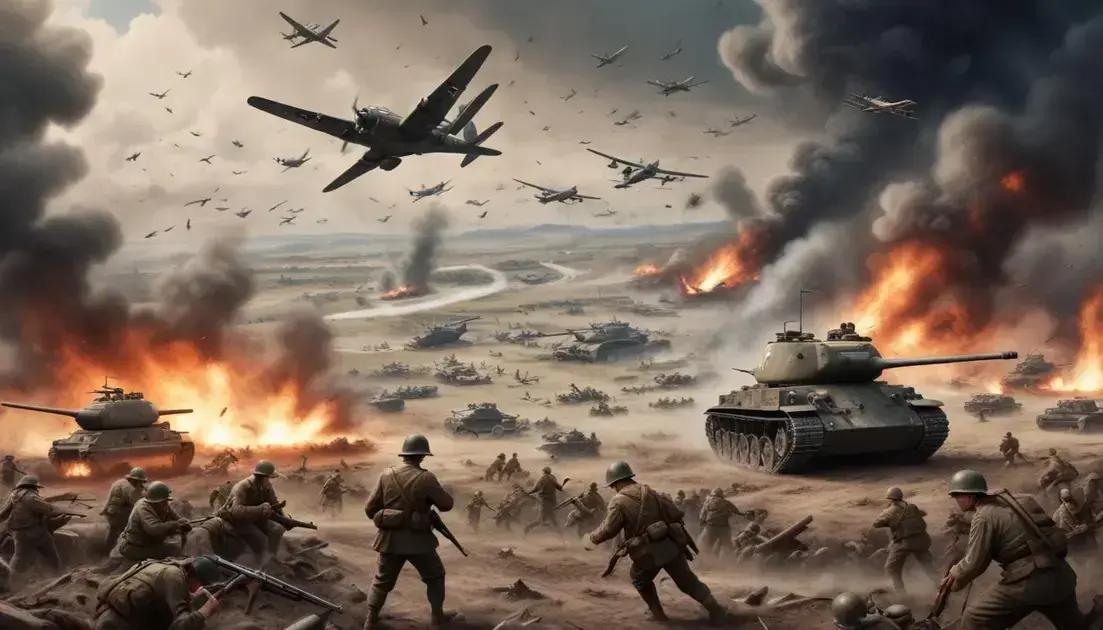
During the Pacific War, several major island battles shaped the course of the conflict. These battles were fierce and crucial for both sides. One of the most significant battles was at Midway Island. The U.S. Navy was able to defeat a much larger Japanese fleet here. This victory changed the tide of the war.
Another important battle was Guadalcanal. It started in August 1942 and lasted for months. This battle marked the first major offensive by Allied forces against Japan. It was tough for both soldiers and civilians, as many lives were lost.
Iwo Jima and Okinawa were also key battles. At Iwo Jima, U.S. troops fought hard to capture the island and its airfields. The famous image of the flag raising on Mount Suribachi comes from this battle. Okinawa was the largest amphibious assault in the Pacific. It involved intense fighting and saw many casualties.
These island battles showed the determination of both the U.S. and Japanese forces. The fight for control over each island became a fight for dominance in the Pacific. They had lasting impacts on strategy and morale for the remainder of the war.
Military strategies employed
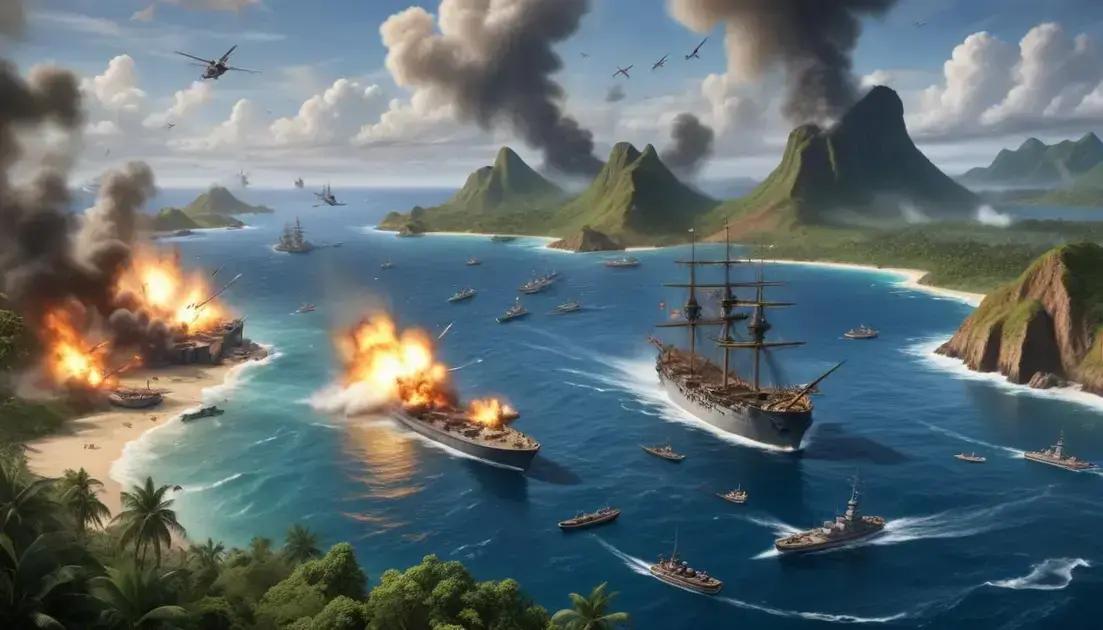
In the Pacific War, both sides used unique military strategies to gain the upper hand. One important strategy was called island hopping. This involved capturing specific islands to use as bases for launching further attacks. By doing this, the U.S. could bypass heavily fortified Japanese positions.
The Japanese had their own strategies, focusing on strong defense and surprise attacks. They built extensive fortifications on captured islands. Their tactics included using kamikaze pilots, who flew suicide missions against Allied ships. This was a desperate but powerful way to inflict damage.
The U.S. also relied heavily on naval power. Aircraft carriers played a crucial role in moving planes and troops across the Pacific. This naval dominance allowed for quick deployments and support during battles.
Another key strategy for the U.S. was the use of intelligence and code breaking. They successfully decoded Japanese messages, which helped in planning their moves. Knowing the enemy’s plans gave them a significant advantage.
Overall, the strategies employed during the Pacific War showed creativity and adaptability. Each side adapted to the circumstances, leading to intense and challenging battles across the ocean.
Impact on global politics
The Pacific War had a huge impact on global politics after it ended. The war changed how countries viewed each other and affected future relationships. After Japan’s defeat, it lost its empire and influence in Asia. This opened the door for the United States to become a superpower.
One major change was the rise of the U.S. as a military leader. With its victory, the U.S. took on a bigger role in world affairs. This led to the formation of alliances, such as NATO, aimed at preventing future conflicts.
The war also set the stage for the Cold War. As the U.S. and Soviet Union emerged as superpowers, their rivalry influenced many countries. Many nations chose sides, aligning with either democracy or communism.
Furthermore, the Pacific War led to the decolonization of Asia. Former colonies started to seek independence, inspired by the U.S. and other Allied powers. Countries like India and Indonesia gained freedom during this period.
Overall, the impact of the Pacific War extended far beyond the battlefield. It reshaped political landscapes and influenced international relations for decades to come.
Legacy of the Pacific War
The legacy of the Pacific War is visible in many areas today. This conflict taught important lessons about warfare and international relations. One significant legacy is how it shaped modern military strategies. Many nations learned from the tactics used during the war, adapting them into their own approaches.
Another part of this legacy is the lasting tensions it created in Asia. Countries like Japan and China still remember the impact of the war. This history affects their political relationships even today.
The Pacific War also had a deep effect on global power dynamics. It marked the rise of the United States as a dominant force in the Pacific. Along with this, Japan underwent major changes. After its defeat, Japan shifted towards a peace-oriented approach and became an economic powerhouse.
The war’s legacy is also seen in how societies view veterans. People recognize the sacrifices made during this time and honor those who served. Memorials and films help keep these memories alive.
Overall, the legacy of the Pacific War continues to influence our world. It is a reminder of the past and a guide for future relations among countries.
Conclusion
In conclusion, the Pacific War was not just a series of battles. It significantly reshaped the world we live in today. The lessons learned from this conflict still influence military strategies and international relations. The rise of the United States as a superpower and the lasting impacts on Japan are prime examples.
Moreover, the legacy of the Pacific War is also about remembering those who served. Honoring veterans and understanding their sacrifices keeps the memory of this crucial time alive. Overall, the Pacific War reminds us of the importance of peace and cooperation among nations.