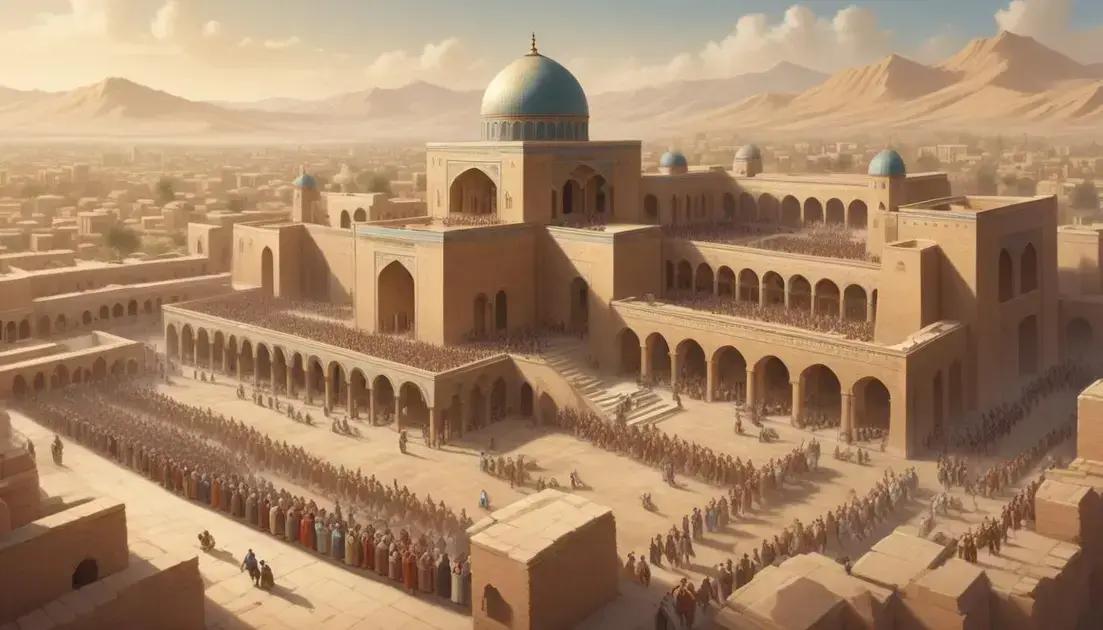
Persia: the empire of tolerance and administration
The Persian Empire was known for its effective governance, cultural diversity, and influential leaders like Cyrus the Great and Darius I. Their administrative methods, including the satrapy system, promoted tolerance and peace among various cultures and religions. This emphasis on diversity helped shape modern ideas about governance and community. Persia’s legacy continues to inspire societies today, emphasizing the importance of inclusion and respect for different customs and beliefs.
Welcome to a look at Persia, a remarkable empire known for its innovative governance and unparalleled tolerance. Have you ever wondered how an empire so ancient could still resonate in today’s world?
The historical context of Persia
The history of Persia is rich and complex. This great empire flourished between the 6th and 4th centuries BC. One of its most powerful leaders was Cyrus the Great. He united many tribes and created a vast empire. Under his rule, Persia expanded greatly.
Geography and Influence
Persia spanned three continents: Asia, Africa, and Europe. This geographical reach allowed for a mix of cultures. Trade flourished along the Silk Road, connecting Persia with other regions.
Culture and Society
The Persian Empire was known for its diverse and tolerant society. People of different backgrounds lived together. They shared customs, languages, and religions. This mixing of cultures enriched the empire.
Government and Administration
Persian rulers set up a system of provinces called satrapies. Each satrapy had a governor. This helped maintain order and manage resources. The leadership style emphasized kindness and respect, which was unique at the time.
Tolerance was a key feature of the Persian Empire. Cyrus the Great even allowed conquered people to keep their own customs. This led to loyalty among various groups and stability in the region.
Legacy of Persia
The influence of Persia extends beyond its time. Many practices in administration and governance today trace back to Persian methods. The ideas of tolerance and respect for different cultures continue to inspire us.
Governance and administration methods
The governance of Persia was innovative for its time. Rulers like Cyrus the Great established a system that worked well. The empire was divided into provinces called satrapies. Each satrapy was governed by a satrap or governor.
Satrapy System
Satrapies allowed for better control over large areas. Governors managed local affairs and collected taxes. This system helped maintain order and efficiency across the empire.
Respect for Local Customs
Persian rulers respected local customs and traditions. They allowed people to continue their own practices. This approach built trust and loyalty among diverse communities.
Efficient Communication
The Persian Empire used a network of roads. These roads connected different provinces and made travel easier. Messengers could quickly deliver information and orders throughout the empire.
Legal Framework
Persian laws were fair and clear. The rulers believed in justice for all citizens. This legal system helped keep peace and order within the empire.
Taxation and Economy
Taxes were collected in various forms, including goods and services. The tax system was designed to be fair. It allowed the economy to thrive while supporting the needs of the government.
Patterns of tolerance and diversity
One of the most remarkable features of Persia was its patterns of tolerance and diversity. The Persian Empire welcomed many cultures and religions. This openness created a unique society.
Embracing Different Cultures
Persians believed that different customs could enrich their empire. People from various backgrounds lived together. This blend of cultures fostered creativity and collaboration.
Religious Freedom
Cyrus the Great, an important Persian leader, allowed people to practice their own religions. This policy built trust among diverse groups. It showed that the empire valued respect over control.
Integration of Local Practices
Local customs were often integrated into Persian society. This approach helped maintain harmony. Instead of forcing change, the Persians adapted and embraced local traditions.
Impact on Society
The diverse population brought many ideas and innovations. From art to science, Persian society thrived because of these contributions. The empire became a center for learning and culture.
Legacy of Tolerance
The patterns of tolerance set by Persia continue to inspire modern societies. The idea of celebrating diversity is more relevant today than ever. Learning from these patterns can help build stronger communities.
Persia’s influence on modern states
Persia has had a lasting impact on modern states. Many aspects of governance and culture can be traced back to this ancient empire. The lessons learned from Persia continue to shape our world today.
Administrative Techniques
Persia’s system of provinces influenced modern government structures. The idea of regional administration helps leaders manage larger areas. This model supports local needs while enabling central control.
Legal Systems
The Persian legal framework set standards for justice. Fair laws and practices encouraged social order. Today, many legal systems around the world reflect these foundational principles.
Cultural Tolerance
Persia promoted ethnic and religious tolerance. This idea encourages peaceful coexistence today. Countries that embrace diversity often see stronger unity among communities.
Trade and Economics
The Persian Empire thrived on trade across cultures. Modern economies benefit from global trade networks. The Silk Road established principles of commerce that are still relevant.
Arts and Architecture
Pership and architecture styles can be seen in various places. Persian designs inspired buildings and art across different cultures. These influences contribute to our appreciation of beauty and craftsmanship.
Key figures in Persian history
Many key figures shaped Persian history. Their actions and decisions impacted the empire and the world. Understanding these leaders helps us appreciate Persia’s influence.
Cyrus the Great
Cyrus the Great was the founder of the Persian Empire. He united many tribes under his rule. His approach of tolerance marked how he governed.
Darius I
Darius I expanded the empire further. He introduced a strong administrative system. His building projects, like the Royal Road, improved communication.
Xerxes I
Xerxes I continued the expansion of the empire. He is known for his invasion of Greece. His leadership during the Persian Wars showed both strength and challenges.
Artaxerxes I
Artaxerxes I focused on domestic stability. He dealt with revolts and strengthened the empire from within. His reign was marked by peace and prosperity.
Key Philosophers and Scholars
Many great thinkers emerged from Persia. They contributed to art, science, and philosophy. Thinkers like Zoroaster influenced religion and culture significantly.
Conclusion
In conclusion, the Persian Empire’s rich history and diverse culture continue to shape our understanding of governance, tolerance, and community. Leaders like Cyrus the Great and Darius I laid the foundation for effective administration. Their values of respect and inclusivity influenced many societies.
Moreover, the legacy of Persian philosophy and art enhances our appreciation of cultural diversity. Today, we can learn from Persia’s approach to governance and community building. Embracing different cultures and ideas can lead to a more harmonious and productive society. Ultimately, the lessons from Persia remind us that diversity and tolerance are key to lasting success.
Tags: