Roosevelt’s New Deal: rebuilding a broken nation
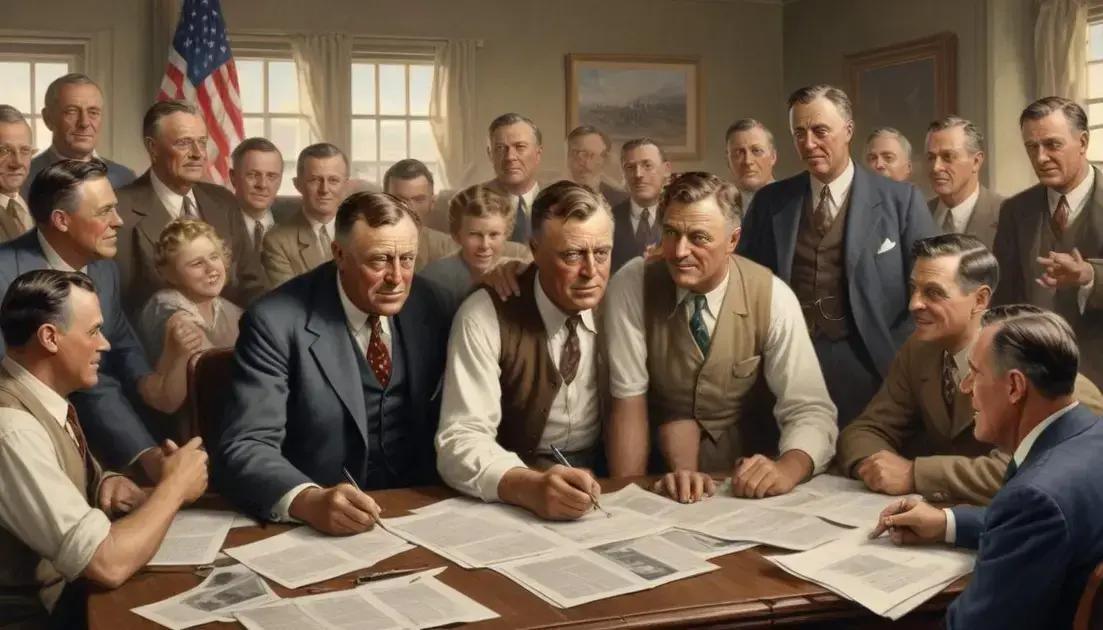
The New Deal was a significant series of programs and policies launched by Franklin D. Roosevelt during the Great Depression. Aimed at economic recovery, it included initiatives like the Civilian Conservation Corps and Social Security, providing immediate relief and long-lasting support for millions of Americans. The New Deal reshaped the government’s role in the economy, fostering job creation and community development while leaving a legacy that continues to influence social policies and cultural life in the U.S. today.
The New Deal was more than just a series of policies; it was a bold leap into uncharted territory aimed at rescuing America from economic despair. Are you curious about how it truly transformed the nation? Let’s dive in!
Introduction to the New Deal
The New Deal was a response to the Great Depression. It aimed to provide relief, recovery, and reforms to help America get back on its feet. During the 1930s, many people were struggling. Jobs were scarce, and individuals faced tough choices. The government sought to change that.
What Sparked the New Deal?
The stock market crash in 1929 set off a chain reaction. Economic panic led to massive unemployment. People had lost trust in banks and businesses. President Franklin D. Roosevelt announced the New Deal to help restore faith and hope.
Key Features of the New Deal
The New Deal included programs to create jobs and support the needy. It also focused on housing, agriculture, and banking reforms. Programs like the Civilian Conservation Corps (CCC) provided work for young men, while the Social Security Act aimed to protect citizens during tough times.
Impact on American Life
These programs helped millions find work and rebuild their lives. Farmers received help to prevent foreclosures. Communities improved with new infrastructure like roads and schools. The New Deal reshaped the role of the government in people’s lives.
Economic Challenges of the 1930s
The 1930s were tough for many people in America. The Great Depression hit hard, causing widespread economic struggles. Unemployment skyrocketed, leaving millions without jobs. Families faced hunger and uncertainty every day.
Impact of the Stock Market Crash
In 1929, the stock market crashed. This event triggered a massive economic downturn. Many banks failed, and businesses shut down. As a result, people lost their savings and income.
High Unemployment Rates
By the early 1930s, unemployment reached 25%. This meant that one out of every four workers couldn’t find a job. Struggling to make ends meet, families had to find new ways to survive.
Farmers in Crisis
Farmers also faced dire situations. Droughts and dust storms can ruin crops. Many farmers lost their land due to debts. This added to the nation’s hardship, especially in rural areas.
Decline in Consumer Spending
As people lost jobs, they spent less money. Stores struggled to stay open. This decline in consumer spending worsened the economy. The cycle seemed endless.
Key Policies and Programs
The New Deal introduced several key policies and programs to address the crisis. These initiatives aimed to provide relief, create jobs, and support economic recovery. Let’s explore some of the important policies.
Civilian Conservation Corps (CCC)
The CCC focused on environmental projects. Young men worked on parks, forests, and soil conservation. This program not only provided jobs but also improved the land.
Public Works Administration (PWA)
The PWA funded large-scale public projects. This included building bridges, highways, and schools. These projects created thousands of jobs and improved infrastructure.
Social Security Act
This act established a social safety net. It provided financial support for the elderly, disabled, and unemployed. This was a major step in helping vulnerable Americans.
Works Progress Administration (WPA)
The WPA was another large program aimed at job creation. It employed millions in various sectors, including construction and the arts. This program helped put many people to work quickly.
Federal Housing Administration (FHA)
The FHA improved housing conditions. It provided loans to help people buy homes. This encouraged homeownership and stimulated the housing market.
Impact on American Society
The New Deal had a huge impact on American society. It changed life for many people, especially during tough times. Programs helped millions find jobs and support their families.
Boosting Job Opportunities
Many New Deal programs created new jobs. From construction to the arts, people found work. This reduced the high unemployment rate and gave hope to struggling families.
Enhancing Infrastructure
New roads, bridges, and schools were built. This improved the nation’s infrastructure. Better infrastructure made transportation easier and connected communities in new ways.
Supporting Vulnerable Populations
Social Security gave financial help to the elderly and disabled. Programs also supported farmers and low-income families. This safety net reduced poverty rates and improved well-being.
Fostering a Sense of Community
During the New Deal, communities came together. People participated in programs and events. They worked alongside each other, strengthening ties and friendships.
Changing Government’s Role
The New Deal changed how people viewed government. Many saw it as a protector. Government became more involved in citizens’ lives, aiming for economic security.
Legacy of the New Deal
The legacy of the New Deal is still felt today. It reshaped how government interacts with citizens. Many programs introduced during this time laid the groundwork for future policies.
Long-Term Programs
Social Security remains a vital program. It helps millions of elderly and disabled people. This program shows how the New Deal aimed to support Americans over time.
Government’s Role in Economy
The New Deal changed the government’s role. It became more involved in economic activities. This shift set a precedent for future government action in times of crisis.
Inspiration for Future Reforms
Many movements for social justice and economic reform cite the New Deal as inspiration. It opened doors for future policies aimed at improving lives.
Cultural Impact
The New Deal also impacted American culture. Art and music flourished through various programs. Projects like the Federal Theatre Project showcased creativity during tough times.
Understanding Economic Security
Today, the New Deal reminds us of the importance of economic security. It teaches us that government can play a role in providing support in difficult times.
Conclusion
In conclusion, the New Deal was a turning point for America. It helped millions of people find jobs and support their families during the Great Depression. The policies introduced during this time not only provided immediate relief but also set the stage for long-term support through programs like Social Security.
The legacy of the New Deal reminds us of the importance of a strong government role in the economy, especially during tough times. Its impact continues to inspire social reforms and cultural growth today. Overall, the New Deal shaped the future of the nation, proving that innovative policies can create hope and change for many.