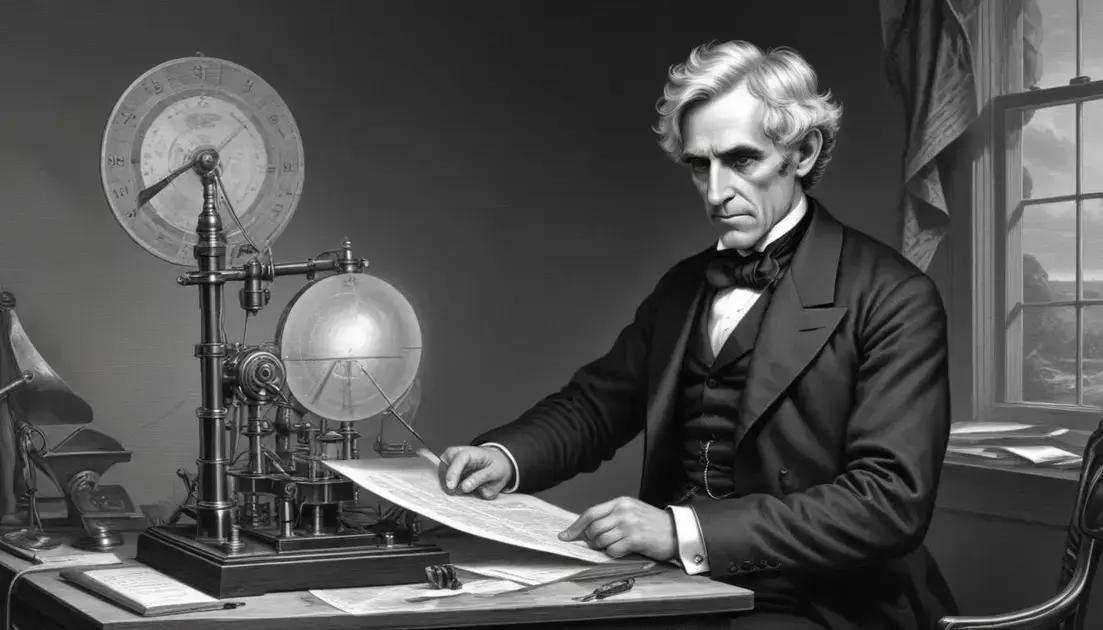
Samuel Morse and the birth of instant communication
The invention of the telegraph by Samuel Morse revolutionized communication, introducing the concept of instant messaging. His development of Morse code allowed for quick and efficient transmission of information over long distances. This innovation had a profound impact on society, transforming business practices, journalism, and personal relationships. Today, the legacy of instant communication continues to shape our interactions and technological advancements, making it vital for modern communication.
Ever wondered how **Samuel Morse** revolutionized communication? His groundbreaking invention paved the way for the information age, changing how we connect today. Let’s dive in!
The inception of Morse code
The inception of Morse code was a revolutionary moment in communication. Samuel Morse and his partner developed this system in the early 1830s. They aimed to create a way to send messages quickly over long distances.
How Morse Code Works
Morse code uses a series of dots and dashes to represent letters and numbers. Each character in the alphabet has a unique pattern. For example, the letter ‘A’ is represented by a dot followed by a dash (•–), while ‘B’ is a dash followed by three dots (–•••).
The First Successful Test
Morse conducted the first successful test of his telegraph and Morse code on May 24, 1844. He sent the famous message, “What hath God wrought?” from Washington, D.C., to Baltimore. This moment marked the birth of modern communication.
Morse code quickly gained popularity. Businesses, news services, and even the military started using it. The telegraph lines expanded rapidly, connecting cities and states. Communication became faster and more efficient. People could send important messages almost instantly.
Morse Code Today
Even today, Morse code is still used in some areas. It remains vital in aviation, maritime communication, and as a learning tool for amateur radio operators. Its simplicity and effectiveness ensure that it will always be part of communication history.
The impact of the telegraph on society
The telegraph changed society in amazing ways. It made communication faster than ever before. Suddenly, news traveled across the nation in minutes instead of days.
Connecting People
Before the telegraph, sending messages took a long time. People relied on horses or ships. With the telegraph, you could send a message across the country instantly. This new technology connected people and businesses like never before.
Transforming Business
Businesses flourished because they could now share information quickly. Stock prices could be updated immediately, helping traders make better decisions. Businesses could react to market changes in real-time.
Changing Journalism
Journalism also changed dramatically. Reporters could send stories back to their newspapers quickly. This led to more accurate and timely news reporting. Everyone wanted to know the latest news, and the telegraph helped supply it.
Influencing Politics
The telegraph impacted politics, too. Leaders could communicate with each other immediately. This quick exchange of information was crucial during important events, like wars and elections. It played a key role in shaping public opinion.
Everyday Life
The telegraph wasn’t just for businesses and politicians. It also changed everyday life. Families could stay connected over long distances. This connection made people feel closer to their loved ones.
Challenges faced by Samuel Morse
Samuel Morse faced many challenges while developing his telegraph and Morse code. One major hurdle was securing funding. Many investors were unsure if his idea would work.
Technical Difficulties
Another challenge was the technology itself. Creating a working telegraph required significant trial and error. Morse had to refine his designs many times before achieving success.
Public Skepticism
Public skepticism was also a big issue. Many people did not understand how the telegraph could revolutionize communication. Some even doubted its reliability and usefulness.
Competition
Morse faced competition from others working on similar technologies. Many inventors wanted to create a faster, better method of communicating. He had to work hard to prove that his version was the best.
Political Challenges
Additionally, there were political challenges. Securing government support was crucial. Morse needed the government to approve telegraph lines across the country.
Legal Battles
Legal battles added to his struggles. Morse had to defend his patents against those who claimed to have invented similar technologies. This took time and resources he could have used elsewhere.
Legacy of instant communication
The legacy of instant communication is powerful and far-reaching. It all began with the telegraph, invented by Samuel Morse. This innovation set the stage for many modern communication methods.
Impact on Society
Instant communication changed how people interact. News and information spread quickly, shrinking the world. Today, we can talk to someone across the globe within seconds.
Technological Advancements
Since the telegraph, technology has evolved dramatically. Phones, emails, and texting are just a few examples of advancements that followed. Each step builds on the foundation that Morse laid.
Changing Business
In business, instant communication is vital. Companies rely on quick exchanges to thrive. This speed allows for better customer service and faster decision-making.
Transforming Relationships
Relationships have also transformed. People now can stay in touch with loved ones easily. Social media platforms connect friends and families instantly.
The Future of Communication
Looking ahead, instant communication will likely continue to evolve. New technologies, like artificial intelligence and virtual reality, may shape how we connect. The legacy of Morse’s invention will always guide these changes.
Conclusion
In conclusion, the invention of the telegraph by Samuel Morse marked a turning point in how we communicate. Instant communication has transformed our lives, making it easier to connect with others. Today, we enjoy benefits that stem from Morse’s legacy, like quick news updates and global connections.
This legacy continues to influence how we interact, both personally and professionally. As technology evolves, the principles of instant communication will remain essential. Embracing these tools helps us stay connected in an ever-changing world.
Understanding the history and impact of instant communication can inspire us to use these technologies wisely for a better future. By valuing these connections, we honor the spirit of innovation Morse introduced to the world.