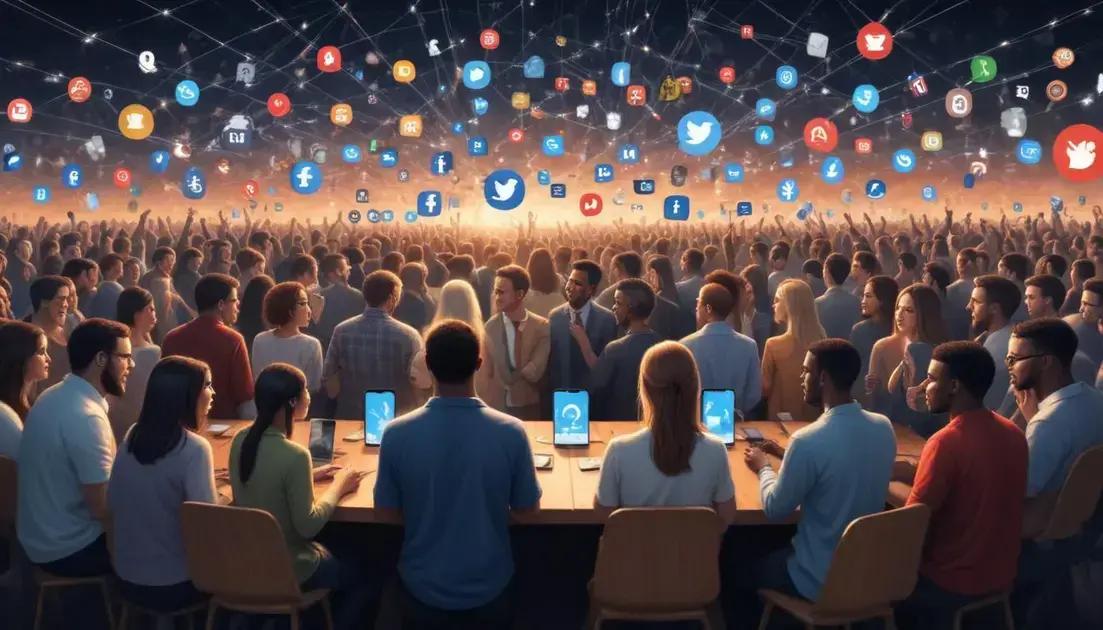
Social media: the networks that changed history
Social media greatly influences modern society by connecting people globally and raising awareness on critical issues. While it offers benefits like enhanced communication and opportunities for social change, it also presents challenges such as misinformation and privacy concerns. The future of social media promises advanced technologies that will enrich our experiences, but it’s essential to navigate these platforms wisely for overall well-being.
Social media has changed the world as we know it, influencing everything from politics to personal relationships. Have you ever thought about how these platforms shape our reality? Let’s dive in!
Introduction
Social media connects people across the globe. It plays a huge role in how we communicate and share ideas. These platforms allow us to express ourselves and connect with others like never before.
Take a moment to think about it. Have you ever met someone online who shared your interests? Social media makes that possible. Whether it’s about your favorite book or a recent movie, there’s a community for everyone.
These platforms not only help us share personal stories but also influence how we see the world. News spreads faster through social media than traditional methods. This means we often discover events and news in real-time.
But it’s not all good. Some of the interactions can be negative. Issues like cyberbullying and misinformation are serious problems that come with social media. It’s important to be aware of these challenges as we navigate these connections.
Ultimately, social media is a double-edged sword. It brings us together but also presents some risks. Understanding its impact helps us use it wisely and responsibly.
The Rise of Social Media
The rise of social media began in the early 2000s. It started with platforms like Friendster and MySpace. These sites changed how people connected online.
Facebook launched in 2004 and opened social media to everyone. It made sharing photos and updates easy. This attracted millions worldwide, changing online communication.
Twitter followed in 2006, allowing people to share brief thoughts in 140 characters. In just a few years, it transformed into a major news source.
Platforms like Instagram and Snapchat brought visual content into the spotlight. Now, sharing videos and photos is a big part of how we interact. This visually-driven approach appeals to younger audiences.
As more people joined, businesses took notice. They began using social media for marketing. Brands started creating profiles to reach customers directly. This led to a shift in advertising.
Today, social media isn’t just for fun. It’s a powerful tool that shapes opinions and trends. Whether it’s sharing news or promoting a cause, its influence is undeniable.
Impact on Society
Social media has had a huge impact on society. It changes how we communicate every day. Online platforms make it easy to connect with people worldwide.
Thanks to social media, we can share ideas and thoughts instantly. It helps friends and families stay in touch, no matter the distance. A quick message or video call keeps relationships strong.
These platforms can also raise awareness about social issues. People share stories about causes they care about. This can lead to movements that push for change.
However, social media isn’t always positive. It can spread fake news and hurtful content quickly. Misinformation can lead to misunderstandings and conflicts.
Cyberbullying is another serious issue linked to social media. Anonymity allows some users to say things they’d never say in person. This can hurt individuals deeply.
Overall, social media shapes our daily lives. It connects us but also brings challenges. Understanding its effects helps us use these platforms wisely.
Case Studies of Change
Many case studies show how social media brings change. One great example is the #BlackLivesMatter movement. This movement started on social media and raised awareness about racial injustice.
Another example is the way companies use social media for customer service. Brands like Nike use Twitter to respond quickly to questions or complaints. This improves customer satisfaction and builds loyalty.
Social media also helps small businesses grow. A local bakery used Instagram to showcase its delicious treats. By sharing appealing photos, they attracted new customers and increased sales.
Additionally, environmental groups use social media to promote awareness. Campaigns to reduce plastic use often go viral. This encourages people to join and make a difference.
These examples show the power of social media. It can lead to real change in our world. Engaging with these platforms can create awareness, build communities, and promote positive action.
Future of Social Media
The future of social media looks bright but also challenging. New technologies are changing how we interact online. Virtual reality and augmented reality may soon change our experiences on these platforms.
Privacy concerns are another big issue. Users want to protect their personal information. Companies need to find ways to keep data safe while still providing a great experience.
Social media will also continue to evolve. We might see more video content and live streaming. These formats already engage users, making connections feel more real.
Additionally, artificial intelligence could help tailor content for users. AI can analyze our behavior to show us what we want to see. This could make our social media feeds more relevant and enjoyable.
However, it’s important to balance engagement with responsible use. Too much screen time can affect our mental health. Finding a healthy way to enjoy social media will be key.
In summary, the future of social media will be exciting. Technology will continue to change how we connect, but we must use it wisely.
Conclusion
In conclusion, social media has transformed our lives in many ways. It connects people, shares ideas, and raises awareness about important issues. However, it also brings challenges like misinformation and privacy concerns.
As we move forward, the evolution of social media will continue to shape how we interact. New technologies will enhance our experiences, making connections deeper and more engaging. At the same time, it’s vital to use these platforms wisely to protect our well-being.
Ultimately, understanding both the benefits and risks of social media is key. By being aware, we can make the most of these tools and create a positive impact on our society.