Spanish-American War: America becomes a world power
The Spanish-American War was a pivotal event in U.S. history that marked America’s transition to a global power. Triggered by factors like support for Cuban independence and the explosion of the USS Maine, the war resulted in significant territorial gains for the United States, including Puerto Rico, Guam, and the Philippines. This shift also led to a change in foreign policy, with the U.S. adopting a more imperialistic approach and expanding its influence, particularly in Latin America. The conflict sparked important discussions about American identity and its role in world affairs, laying groundwork for future military and diplomatic actions.
The Spanish-American War marked a pivotal moment in history, transforming the United States into a formidable global presence. Curious about how a short war reshaped America’s destiny?
The causes of the Spanish-American War
The Spanish-American War started in 1898 and had several main causes. One major cause was American interest in Cuba. Many Americans wanted to help Cuban rebels who were fighting for independence from Spanish rule. This support built strong public sentiment in the United States.
Another cause was the explosion of the USS Maine. In February 1898, the battleship Maine blew up in Havana Harbor. Although the cause wasn’t clear, many Americans blamed Spain. This event fueled anger and pushed the U.S. closer to war.
Additionally, yellow journalism played a role. Newspapers exaggerated reports about atrocities in Cuba. These sensational stories stirred emotions and influenced public opinion strongly against Spain.
Economic interests also mattered. American businesses had investments in Cuba, especially in sugar and tobacco. A stable, independent Cuba promised more opportunities for American trade. Thus, the mix of humanitarian, political, and economic factors led to the outbreak of the war.
Key battles and events
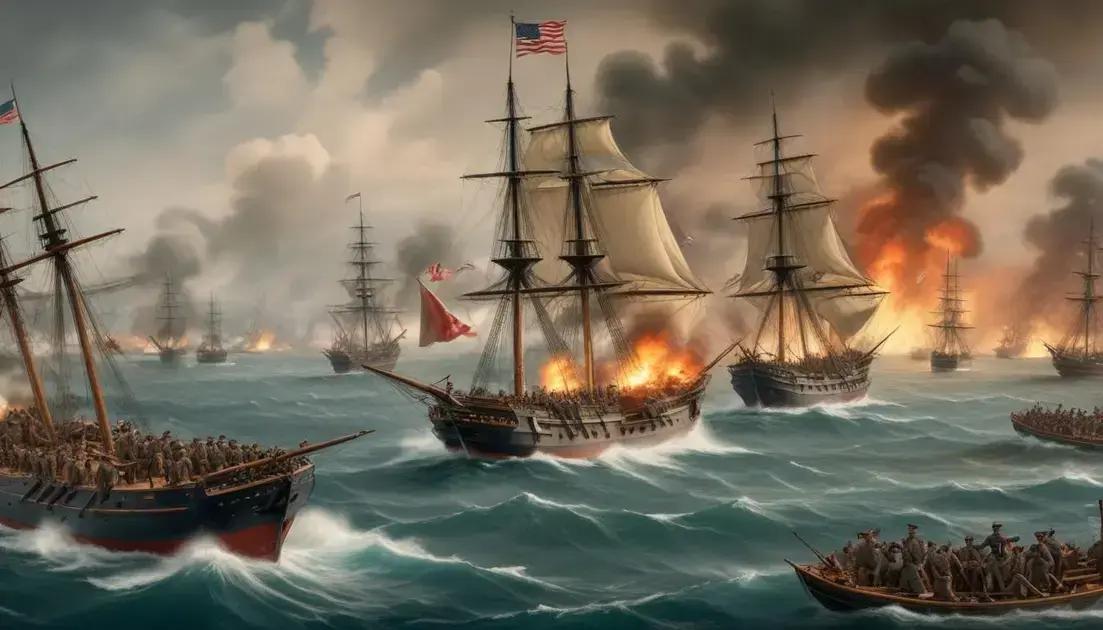
During the Spanish-American War, several key battles and events shaped the course of the conflict. One of the first major battles was the Battle of Manila Bay. On May 1, 1898, the U.S. Navy, led by Commodore George Dewey, defeated the Spanish fleet in the Philippines. This victory gave the U.S. control of the bay and marked a turning point in the war.
Another significant event was the Battle of San Juan Hill. On July 1, 1898, American troops, including Theodore Roosevelt and his Rough Riders, fought bravely to capture the hill. This victory helped secure the city of Santiago de Cuba.
Later, the Siege of Santiago took place. U.S. forces surrounded the city for weeks. Eventually, Spanish troops surrendered on July 17, 1898. This was a critical moment that led to the end of the war.
These battles showcased American military strength and determination. They also highlighted the bravery of soldiers. The success in these events ultimately paved the way for the Treaty of Paris.
Impact on U.S. foreign policy
The Spanish-American War had a big impact on U.S. foreign policy. It marked a shift from isolationism to a more active role in global affairs. After the war, America gained new territories, including Puerto Rico, Guam, and the Philippines.
This expansion changed how the U.S. interacted with other countries. For example, America began to take a more significant interest in Latin America. The idea of the Monroe Doctrine was strengthened. It stated that Europe should not interfere in the Americas.
Moreover, the war led to the concept of imperialism. Many viewed the U.S. as a rising world power. This imperialism involved influencing smaller nations economically and politically.
The U.S. also started to build a stronger military presence, especially in the Caribbean and the Pacific. This helped protect new interests and trade routes. Overall, the Spanish-American War shaped a new era of American involvement in world events.
Legacy and historical significance
The Spanish-American War left a lasting legacy and historical significance for the United States. It marked America’s emergence as a global power. The war changed how the U.S. interacted with other nations and influenced future foreign policy.
One important outcome was the Treaty of Paris in 1898. This treaty ended the war and gave the U.S. control over Puerto Rico, Guam, and the Philippines. These territories helped the U.S. expand its presence in the Caribbean and the Pacific.
The war also sparked debates about imperialism. Some Americans supported expansion, believing it was their duty to promote democracy. Others opposed it, feeling it contradicted America’s founding principles.
Additionally, the war influenced military strategy and national defense. The U.S. strengthened its Navy and began modernizing its armed forces. This laid the groundwork for future military engagements.
Overall, the Spanish-American War changed the course of American history. Its legacy continues to shape discussions about U.S. involvement in world affairs today.
Conclusion
In conclusion, the Spanish-American War played a significant role in shaping the United States. It marked America’s rise as a global power and changed how the country interacted with the world. The war’s outcomes, like the Treaty of Paris, expanded U.S. territories and interests.
Additionally, the conflict sparked important discussions about imperialism and national identity. The legacy of this war continues to influence American foreign policy today. Understanding this history helps us see how past events shape our current world and future decisions.
Overall, the Spanish-American War stands as a key moment in American history, reminding us of the importance of understanding our past to better navigate the future.