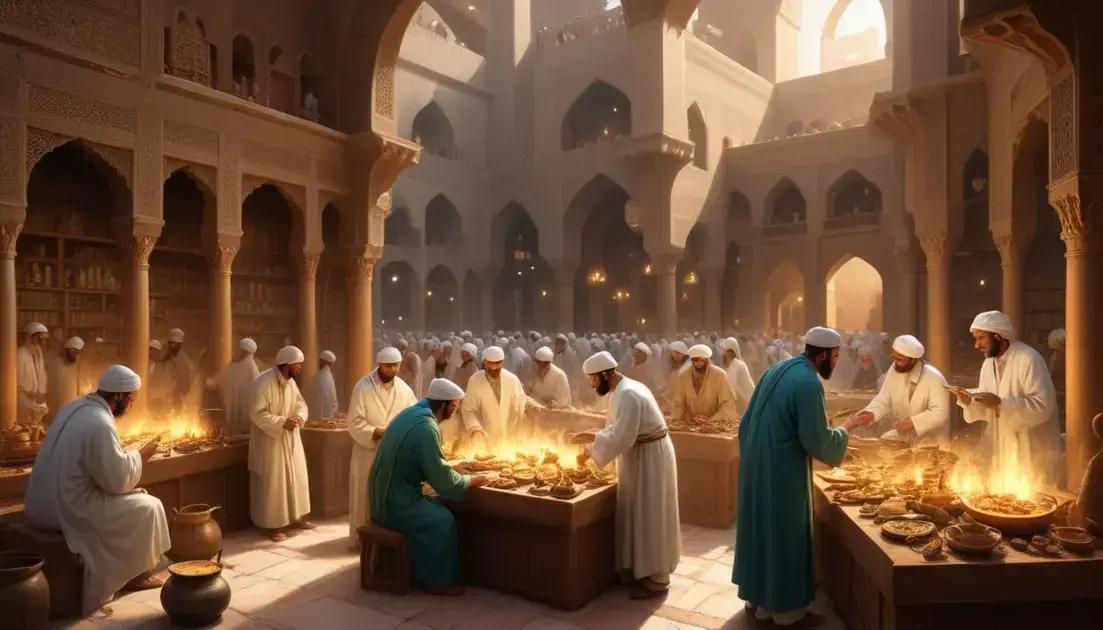
The Golden Age of Islam: Science, Art, and Empire
The Islamic Golden Age significantly advanced fields like science, medicine, arts, and philosophy. Scholars like Al-Razi and Avicenna made notable contributions that shaped modern practices. Their work on topics such as algebra, medical ethics, and astronomy not only preserved ancient knowledge but also inspired later innovations in Europe. This period emphasized the importance of cultural appreciation and intellectual discourse, leaving a lasting legacy that continues to influence education and creativity today.
Welcome to the fascinating world of the Islamic Golden Age, where scholars revolutionized medicine, mathematics, and astronomy…
The Emergence of Knowledge
The Emergence of Knowledge during the Islamic Golden Age was truly remarkable. Scholars from different backgrounds came together and shared ideas. This collaboration led to groundbreaking advancements in various fields.
Key Scholars of the Time
Famous scholars like Al-Khwarizmi made huge contributions to mathematics. He introduced concepts that shaped how we understand algebra today. Another brilliant mind, Avicenna, is known for his work in medicine. His book on medical knowledge was used for centuries.
Translation Movement
During this period, there was a strong focus on translating ancient texts. Many Greek and Roman works were translated into Arabic. This helped preserve knowledge and made it accessible to more people. Scholars studied these texts and built on them, leading to new discoveries.
Innovation in Science
In science, the Islamic world saw growth in areas like astronomy. Observatories were built to study the stars and their movements. These efforts helped improve navigation and calendars.
Writing was also significant. Poets and writers flourished, creating works that explored human experience and emotions. This blossoming of creativity changed literature forever.
Impact on the Modern World
The knowledge that emerged during this time is essential to our understanding today. The ideas developed by these scholars influenced the Renaissance and modern sciences. By sharing their discoveries, these pioneers helped shape the future for generations to come.
Contributions in Medicine and Science
The Contributions in Medicine and Science during the Islamic Golden Age were impressive. This era saw many advancements that changed how people understood health and the natural world.
Innovations in Medicine
One of the most significant figures was Al-Razi, known as Rhazes in the West. He wrote many books on medicine, including topics like smallpox and measles. His ideas about diagnosis and patient care helped shape modern practices.
Avicenna’s Canon of Medicine
Then there’s Avicenna, whose work, The Canon of Medicine, is still respected today. This comprehensive guide covered various medical fields such as anatomy and pharmacology. It was used in medical schools for hundreds of years.
Scientific Methods
During this time, scholars developed methods for conducting experiments. They focused on observation and recording results. This emphasis on evidence laid the groundwork for modern scientific methods.
Philosophy and Ethics in Medicine
Ethics also played a role in medicine. Doctors were encouraged to treat patients with compassion and care. This idea is foundational in medical ethics today.
Lasting Effects
The progress made in this era influenced Europe’s understanding of medicine. Many of these scholars’ texts were translated and studied in Western universities. Their contributions paved the way for future medical discoveries and innovations.
Advancements in Arts and Philosophy
The Advancements in Arts and Philosophy during the Islamic Golden Age were exceptional. This period saw a surge in creativity and deep thinking across many disciplines.
Cultural Flourishing
Artists created beautiful works that reflected their rich culture. Calligraphy, painting, and textile arts thrived during this time. Each piece often told a story or carried symbolic meanings.
Literature and Poetry
Literature also flourished. Poets like Rumi and Omar Khayyam wrote verses that explored love, nature, and the human experience. Their work continues to inspire people today.
Philosophical Contributions
In philosophy, thinkers like Al-Farabi and Al-Ghazali made significant contributions. They blended Greek philosophy with Islamic teachings. Their ideas about ethics, existence, and the universe opened new paths for thought.
Encouragement of Intellectual Discourse
Debates and discussions were encouraged in schools and public arenas. This exchange of thoughts led to rich intellectual traditions. Scholars built on each other’s ideas, paving the way for future knowledge.
Impact on Later Cultures
The advancements made in the arts and philosophy influenced later cultures. They played a vital role in the European Renaissance and shaped modern thought. The legacy of this creative era still resonates in the arts and humanities today.
Cultural Legacy of the Empire
The Cultural Legacy of the Empire during the Islamic Golden Age is vast and impactful. This period laid strong foundations for many aspects of culture that we see today.
Architectural Wonders
The empire was known for impressive architecture. Structures like mosques and palaces showcased stunning designs. The use of intricate patterns and vibrant colors made these buildings remarkable.
Influence on Language and Literature
Arabic became a key language of knowledge and trade. Many literary works from this era have left lasting influences. Stories from famous poets and writers continue to be studied today.
Music and Arts
Music and arts also thrived. Musical instruments were developed, leading to rich traditions. Artists created beautiful works that reflected the empire’s diversity and creativity.
Scientific and Philosophical Contributions
The emphasis on learning influenced science and philosophy. Scholars like Al-Khwarizmi and Avicenna made discoveries that shaped both fields. Their ideas still find relevance in modern studies.
Global Impact
The legacy of this cultural explosion reached far beyond its borders. It inspired European Renaissance thinkers and artists. The knowledge shared across cultures continues to benefit humanity.
Modern Implications of Historical Knowledge
The Modern Implications of Historical Knowledge are significant. Understanding history helps us shape a better future. Lessons from the past inform our decisions today.
Influence on Education
Studying history encourages critical thinking. Students learn to analyze events and understand cause and effect. This skill is important in many areas of life.
Cultural Appreciation
Knowledge of history fosters cultural appreciation. By understanding different cultures, we can promote tolerance and respect. This awareness helps us to build a more inclusive society.
Innovation and Development
Many modern technologies and ideas stem from earlier discoveries. Learning about past innovations can inspire new solutions to current challenges. This connection drives progress in science and technology.
Political Awareness
History provides insights into political systems. Understanding how governments evolved helps citizens engage in democracy. Informed citizens can make better choices during elections.
Preserving Heritage
Knowing our history aids in preserving cultural heritage. We value our roots and ensure traditions are passed down. This connection to our past is vital for community identity.
Conclusion
In conclusion, the Islamic Golden Age left a profound mark on our world. The advancements in medicine, science, arts, and philosophy continue to influence us today. Understanding this rich history helps us appreciate the knowledge we have inherited.
By learning from the past, we can foster a more inclusive society and drive innovation. The connections between historical and modern knowledge are essential for our growth. As we move forward, let’s remember the lessons from history to shape a better future for everyone.
Tags: