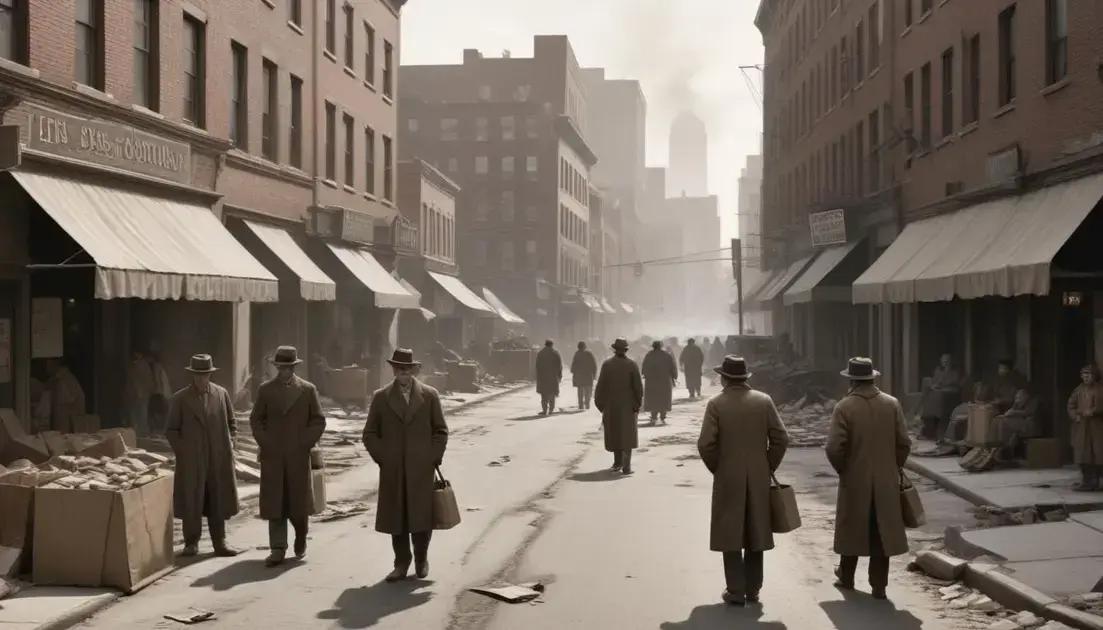
The Great Depression: the global economic collapse
The Great Depression significantly shaped modern economics and society, marking a pivotal period that led to critical regulatory changes, social programs, and a heightened awareness of financial responsibility. Its legacy emphasizes the importance of government intervention in stabilizing economies, fostering resilience in individuals and communities, and establishing safety nets like Social Security. Understanding these historical lessons is essential for preventing future crises and building a stronger economic foundation today.
The Great Depression was more than just a financial downturn; it was a pivotal moment that changed the course of history. Ever wondered how such an event reshaped politics and society?
Understanding the causes of the Great Depression
Understanding the causes of the Great Depression helps us learn from the past. This economic downturn wasn’t sudden. It was the result of several factors that built up over time.
Overproduction and Underconsumption
One major cause was overproduction. Factories were making too many goods, but people couldn’t buy them. When stores had lots of unsold items, businesses cut back on production. This led to job losses.
Stock Market Crash
The stock market crash of 1929 was a big shock. Many people invested heavily in stocks without knowing the risks. When prices fell, panic set in. Investors lost confidence, and the market plummeted.
Bank Failures
Another issue was bank failures. Many banks lent money to those who couldn’t pay it back. When loans went unpaid, banks lost money and shut down. People lost their savings, which added to the economic crisis.
Global Impact
The Great Depression spread worldwide. Other countries faced similar problems, like falling prices and unemployment. Trade dropped, making recovery even slower for everyone. Countries struggled to help their citizens.
Government Policies
Government policies also played a role. Some decisions made things worse. For example, the Smoot-Hawley Tariff raised taxes on imported goods. This led to fewer imports and worsened the already bad economic situation.
Key events during the economic collapse
Several key events shaped the Great Depression. Understanding these events helps us grasp the full impact on society.
The Stock Market Crash of 1929
This was a significant trigger. In late October 1929, the stock market crashed. Many people lost their investments in just days. This event set off panic and fear across the nation.
Bank Runs
After the crash, people rushed to take their money out of banks. These bank runs caused many banks to fail. People lost their savings, and trust in banks plummeted.
Unemployment Rates Soar
As businesses closed, unemployment rates skyrocketed. Millions of people found themselves without jobs. Families struggled to make ends meet as the job market shrank.
Dust Bowl
The Dust Bowl added to the crisis. Severe drought and poor farming practices led to massive dust storms. Farmers lost their crops and livelihoods, forcing many to leave their homes.
New Deal Programs
In response to the crisis, President Franklin D. Roosevelt introduced the New Deal. This set of programs aimed to help the economy recover. Programs created jobs, supported farmers, and provided relief to struggling families.
Impact on society and politics
The Great Depression had a huge impact on both society and politics. It changed how people lived and how governments operated.
Social Changes
Many families faced struggles during this time. They lost jobs, homes, and savings. People had to find new ways to survive. Neighbors helped each other with food and shelter.
Political Shift
This economic crisis also changed politics. Many Americans lost faith in traditional leaders. They looked for new solutions and trusted new ideas.
Rise of Government Programs
To help, the government created programs like the New Deal. These programs aimed to provide jobs and support to those in need. People demanded action, and the government responded.
Labor Movements
The effects of the Great Depression also fueled labor movements. Workers organized to fight for better pay and working conditions. They wanted fair treatment and security in their jobs.
Social Safety Nets
The crisis led to discussions on social safety nets. Programs to assist the poor and unemployed became more accepted. These ideas helped shape future policies in America.
Lessons learned from past financial crises
Studying the Great Depression helps us learn valuable lessons. Understanding past financial crises can guide us today.
Importance of Regulation
One big lesson is the need for better regulation. The 1920s were a time of little oversight. This allowed risky behaviors that led to the crash.
Diversifying Investments
Diversification is crucial. Many people lost everything by investing too much in the stock market. Spreading investments across different areas can reduce risks.
Emergency Funds
Creating an emergency fund is another key lesson. Having savings can help weather financial storms. It provides security when unexpected expenses arise.
Economic Awareness
Being informed about the economy is important. Understanding basic economic principles helps individuals make better financial decisions. Knowledge can empower people to act wisely.
Government’s Role
The government has a role in stabilizing the economy. During crises, prompt action is essential to prevent further collapse. Programs should aim to protect the most vulnerable.
The legacy of the Great Depression in today’s economy
The Great Depression left a lasting legacy on today’s economy. Understanding this impact is crucial for everyone.
Regulatory Changes
One major change is in regulations. After the crisis, new laws were put in place. These laws aimed to prevent such a disaster from happening again.
Social Programs
Many social programs started during this time still exist today. Programs like Social Security provide safety nets for Americans. They help support those in need during tough times.
Economic Policies
The way we handle economic policies today is shaped by the past. Governments now play a bigger role in stabilizing the economy. They take action to prevent deep recessions.
Cultural Awareness
The Great Depression also changed how people view money. There’s more focus on savings and responsible spending. People are cautious and often remember the struggles of their ancestors.
Lessons in Resilience
Finally, the lessons learned promote resilience. The ability to adapt during tough times is valued. Businesses and individuals aim to be prepared for future challenges.
Conclusion
In conclusion, the Great Depression taught us important lessons about economics and society. Understanding its impact helps us navigate today’s challenges. We’ve seen how regulation, social programs, and economic awareness have evolved since then.
This legacy reminds us to be resilient and prepared. Learning from the past can help us make smarter choices in the future. By maintaining a focus on savings and responsible spending, we honor those who faced hardships during that time.
Ultimately, the Great Depression serves as both a warning and a guide. It shows us the importance of community support, strong government action, and a commitment to learning. By remembering this history, we can build a better economic future for everyone.