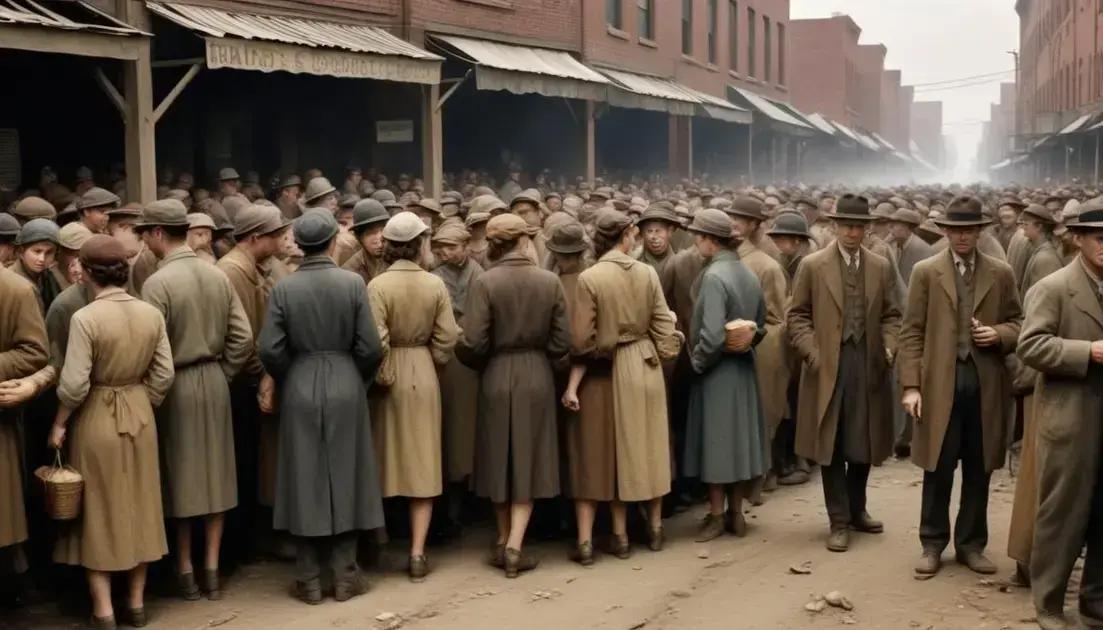
The Great Depression: when the American dream collapsed
The Great Depression was a transformative period in American history, significantly altering the economy, politics, and social structures. It began in the late 1920s, leading to widespread unemployment, bank failures, and poverty. The event reshaped the American Dream, as many questioned their goals and values. The government responded with the New Deal, introducing programs to provide relief and stimulate economic recovery. This era highlighted the importance of community support and collaboration, as people united to help one another through hardships. Overall, the Great Depression teaches valuable lessons about resilience and the role of government in society.
The **Great Depression** was not just a downturn in the economy; it was a profound period that altered the landscape of American life. What led to such a seismic shift? Let’s explore.
Overview of the Great Depression
The Great Depression was a major economic downturn that began in the late 1920s. It changed lives and impacted millions of people across the globe. The stock market crash of 1929 marked the start of this crisis. Many lost their jobs, savings, and homes. The effects were felt everywhere, from farmers to factory workers.
What Happened? During the Great Depression, businesses failed, banks closed, and unemployment rates soared. Some estimates say that up to 25% of Americans were without work at the height of the crisis. Families struggled to put food on the table. Many relied on soup kitchens and charity for help.
Why It Matters This period reshaped how people viewed the government’s role in the economy. Many believed that strong action was needed to help those in need. The New Deal programs introduced by Franklin D. Roosevelt aimed to provide relief and recovery. These initiatives laid the groundwork for modern social welfare in the U.S.
The Great Depression also impacted global relations. Countries around the world faced economic challenges and unemployment. This led to changes in trade policies and politics, many of which are still evident today.
Impact on the American Dream
The Great Depression had a huge impact on the American Dream. Many people lost their jobs and savings. This left them questioning what that dream really meant. For a lot, it was no longer about home ownership or a steady job.
Dreams Shattered Families faced tough times. They struggled to feed their children and pay rent. The dream of a better future felt out of reach. The hard times showed many that achieving success was not as easy as they thought.
Hope in Hardship Despite the difficulties, people came together. Neighbors helped each other survive. This sense of community offered some hope. People began to redefine what success really meant. It wasn’t just about money; it was about family and support.
The Great Depression changed how Americans thought about their dreams. Many realized that hardship can bring people closer. The struggles they faced brought new values to the forefront. They learned the importance of resilience and teamwork.
This shift in thinking showed them that the American Dream could be rebuilt. It wasn’t just an idea; it was about working together through tough times.
Economic Consequences
The Great Depression brought huge economic consequences that changed America. Many businesses failed during this time. Jobs were lost, and people struggled to make ends meet. The unemployment rate reached around 25%, which was shocking.
Bank Failures A lot of banks closed their doors. People lost their savings as a result. Trust in financial institutions dropped sharply. This made it hard for people to borrow money for homes or businesses.
Rise in Poverty As jobs vanished, many families fell into poverty. It wasn’t only workers who suffered. Children went hungry, and countless homes were lost to foreclosure. The daily struggle for food became common.
Government’s Role The government had to step in. Programs were created to provide aid and relief. President Franklin D. Roosevelt’s New Deal programs aimed to kickstart the economy. Roads and bridges were built to create jobs.
These government actions helped some families survive. But the road to recovery took a long time. Overall, the economic consequences of the Great Depression taught many valuable lessons about financial security.
Political Changes
The Great Depression led to significant political changes in the United States. Many people felt the government needed to do more to help. This shift in thought influenced policies and programs.
New Deal Programs President Franklin D. Roosevelt introduced the New Deal to address economic struggles. These programs focused on relief, recovery, and reform. They aimed to provide immediate help to those in need.
Expanded Government Role During this time, the government took a more active role in people’s lives. New agencies were created to manage relief efforts and boost the economy. This was a big change for America, where people often relied on themselves.
Labor Rights The Great Depression also gave rise to labor movements. Workers fought for better wages and working conditions. Strikes became common as people demanded their rights. Unions gained strength as workers united for change.
These political changes set the stage for future reforms. They shaped the way Americans viewed their government and its responsibility to help citizens in need.
Social Effects
The Great Depression caused many social effects that changed society. Families and communities faced struggles like never before. People had to adapt to new circumstances quickly.
Community Support During this tough time, many neighbors came together to help each other. Soup kitchens and food banks became common. Communities rallied to support families in need.
Impact on Families Families had to make tough choices. Many parents lost jobs, which created stress at home. Children sometimes had to leave school to work. The desire for education faced many challenges.
Changing Gender Roles The Great Depression also changed gender roles. Women took on more jobs to support their families. Many worked in factories and offices, showing their strength. Society began to see women in new roles.
Lasting Changes The social effects of the Great Depression reshaped the American landscape. People learned the importance of unity and support. These changes carried on long after the Depression ended.
Conclusion
In conclusion, the Great Depression was a time of great struggle and change for America. It reshaped the economy, politics, and society. The impact on the American Dream was profound, as many reevaluated what success truly meant.
During this challenging period, people learned the importance of community and support. The government took a more active role in helping citizens, which changed how Americans viewed their leaders. Resilience and adaptability became key traits for many.
Ultimately, the lessons learned during the Great Depression still resonate today. They remind us of the strength found in unity and the importance of caring for one another in tough times. Understanding this part of history helps us appreciate the progress we’ve made and the challenges we still face.