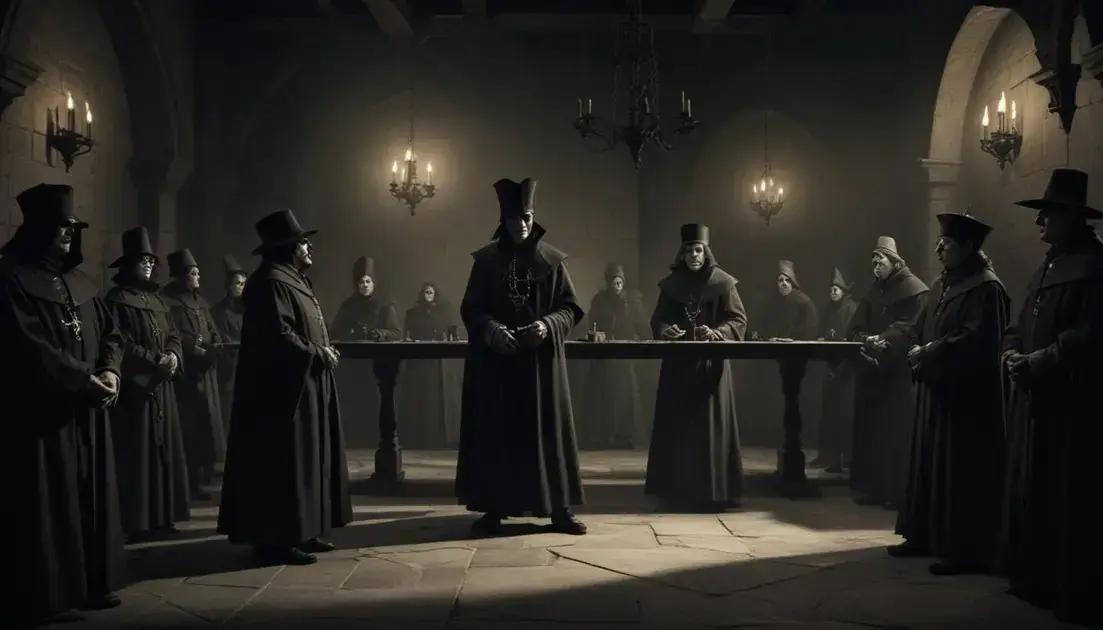
The Inquisition: fear, control, and persecution
The Inquisition was a powerful religious institution known for instilling fear and control throughout history. It utilized public trials, torture, and propaganda to maintain its authority, leading to widespread mistrust among communities. The impact of the Inquisition was profound, affecting individual lives and stifling cultural expression. Its legacy highlights the importance of tolerance, accountability, and understanding the dangers of unchecked power, reminding us to promote acceptance over persecution in today’s society.
Inquisition evokes images of fear and ruthless control, a dark chapter in history that still sparks debate today. What drove this relentless pursuit of conformity? Let’s dive in!
Historical context of the Inquisition
The Inquisition began in the 12th century. It was created to maintain control over religious beliefs. This time was marked by a struggle between different faiths and ideas. Society was changing, and the Church wanted to ensure loyalty.
During the Middle Ages, many believed that heresy threatened the stability of their communities. The Church saw itself as the protector of faith. They aimed to root out anyone who challenged their authority.
The Inquisition spread across Europe. Different regions had their own versions, but all shared the same goal: to reclaim what they saw as the true religion. They used trials that often led to harsh punishments.
Many people feared the Inquisition. Lives were ruined because of false accusations. Communities were torn apart as neighbors turned against each other. The stress of these times changed how people viewed their faith.
By the 16th century, the Inquisition became a tool for political control. Rulers used it to strengthen their power. The mixture of religion and politics made it a complex part of history. Understanding this context is key to grasping the full impact of the Inquisition.
Mechanisms of control and fear
The Inquisition used several mechanisms to control fear among the people. One of the main tools was public trials. These trials were often held to make examples out of those accused of heresy.
Fear spread quickly. People worried about being accused. Neighbors often reported each other to stay safe. This created a tense atmosphere in communities. Everyone felt the pressure to conform.
Another key mechanism was torture. Many confessions came from fear of pain. The Inquisition believed that extreme methods were justified to root out heresy. Sadly, these tactics often led to false confessions.
Inquisitors also used propaganda. They promoted the idea that heresy was a threat to society. By painting a picture of danger, they amplified fear. This made people more likely to support their harsh actions.
The Inquisition’s control relied on an environment where distrust thrived. As fear took hold, people were less likely to stand up against the Church. They worried about the consequences of speaking out, further tightening the grip of the Inquisition.
Impact on society and individuals
The Inquisition had a profound impact on both society and individual lives. Many people lived in constant fear. This led to mistrust among neighbors and families.
People who were accused faced severe consequences. They could be tortured or even killed. This created a chilling effect on free thought. Individuals became afraid to express their beliefs.
Society changed drastically. Communities were divided by suspicion. Friends and families turned against each other. Loyalty to the Church often came before personal relationships.
The Inquisition also affected culture. It stifled creativity and new ideas. Artists and thinkers feared for their safety. This fear halted many advancements in art and science.
Even after the Inquisition ended, its legacy lingered. The scars left on society took generations to heal. Many still remember the fear and control it spread across the land.
Legacy and lessons of the Inquisition
The Inquisition left a complex legacy. It serves as a powerful reminder of how fear can control people. Many lessons can be learned from this dark chapter in history.
One major lesson is the importance of tolerance. The Inquisition shows what can happen when differences aren’t accepted. Respecting diverse beliefs can help prevent future conflicts.
Another lesson is the danger of unchecked power. The Inquisition had almost no limits, leading to harsh consequences for many. Society must hold authorities accountable to protect individual rights.
Additionally, it highlights the risks of spreading fear. Fear can distort reality, making people act against their better judgment. Understanding this can help us cultivate safer and more accepting communities.
Today, we can draw on these lessons to encourage open dialogue and understanding. By doing so, we can strive for a world that values peace over persecution.
Conclusion
In conclusion, the Inquisition serves as a powerful reminder of the dangers of fear and control. Its legacy teaches us the importance of tolerance and respect for different beliefs. We must also recognize the risks that come with unchecked power and the effects of spreading fear.
By learning from this chapter in history, we can work towards a more accepting society. Open communication and understanding help build communities that value peace. As we reflect on these lessons, let’s strive to create a future where everyone is free to express their beliefs without fear.