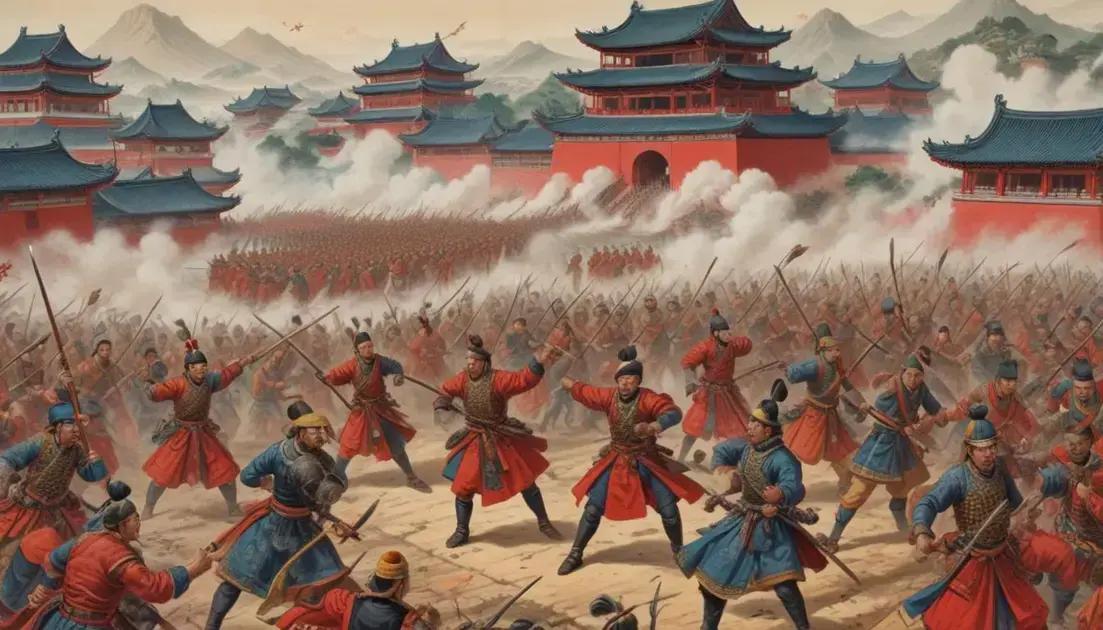
The Qin Dynasty: the unification of China
The Qin Dynasty, known for unifying China, had a profound legacy that includes the establishment of a centralized government, standardization of currency, measurements, and writing systems, as well as major infrastructure projects like the Great Wall. Although it lasted only a short time, the dynasty’s impact on governance, law, and cultural practices continues to influence modern China, highlighting the significance of strong leadership and societal order.
Qin Dynasty marks a pivotal chapter in Chinese history, where unification came through war and strict philosophies. Ever wondered how such a legacy was formed? Let’s dive into the remarkable story!
The rise of Qin Shi Huang
The rise of Qin Shi Huang is an incredible story of strength and ambition. He started as a king of the Qin state in ancient China. His fierce determination helped him unite several warring states into one powerful empire.
Early Life
Born in 259 BC, Qin Shi Huang was the son of the king. He became king at a young age but faced many challenges. His early years were marked by uncertainty and danger. However, he was not afraid to take risks to secure his power.
Unification of China
By 221 BC, Qin Shi Huang completed the unification. He conquered rival states and brought them under his rule. This marked the beginning of a centralized government in China. The new empire was vast and diverse, including many cultures and peoples.
Military Strategies
Qin Shi Huang was a brilliant military leader. He trained his armies well and used innovative strategies. His forces were well-organized and disciplined. This gave them an advantage in battles against other states.
Legalism and Governance
He adopted Legalism as his guiding philosophy. This strict approach to law focused on strict punishments and rewards. It aimed to ensure order and control throughout the empire. Qin Shi Huang believed that strong laws were essential for a strong state.
Building Infrastructure
The emperor invested in massive infrastructure projects. He connected roads and built canals to improve trade and communication. This made traveling easier and faster across his vast empire. Such developments helped strengthen the economy.
Cultural Impact
Qin Shi Huang’s reign left a lasting legacy. His push for standardization affected language, measurements, and even currency. This unity helped foster a shared Chinese identity. Even today, his achievements are remembered and studied.
The role of Legalism
Legalism played a crucial role in the governance of the Qin Dynasty. It was a philosophy that emphasized strict laws and harsh punishments. This approach helped Qin Shi Huang maintain control over his vast empire.
The Principles of Legalism
Legalism focuses on the idea that people are inherently selfish. It believes that clear laws are necessary to keep order. Leaders should use strict punishments to discourage bad behavior. Rewards should be given for good behavior to encourage compliance.
Implementation of Legalism
When Qin Shi Huang came to power, he applied Legalism throughout the empire. He replaced old laws with new ones to unify his people. This helped create a standardized legal system across different regions.
Impact on Society
Under Legalism, civil rights were limited. People had to follow strict rules and could face harsh penalties for disobedience. This created fear but also order. Society became more organized, and the central government gained power.
Controversy and Criticism
Many did not agree with Legalist practices. Critics argued that it was too harsh. They believed it stifled creativity and individual freedoms. However, the effectiveness of Legalism in controlling the empire is hard to deny.
Legacy of Legalism
Legalism’s influence lasted well beyond the Qin Dynasty. It set the foundation for future Chinese governance. Today, scholars study Legalism to understand its role in shaping China’s political history. Though not widely accepted now, its impact is undeniable.
Militarization and conquests
The militarization of the Qin Dynasty was key to its success. Qin Shi Huang built a strong army to conquer rival states. This military strength helped unify China.
Building a Powerful Army
Qin Shi Huang focused on creating a disciplined and efficient military. He trained soldiers rigorously and provided them with the best weapons. This preparation made them a force to be reckoned with.
Military Strategies
The Qin army used smart tactics in battles. They often employed surprise attacks and superior formations. These strategies allowed them to win many conflicts.
Conquests of Rival States
From 230 to 221 BC, Qin Shi Huang launched campaigns against six major states. These states included Han, Zhao, Wei, Chu, Yan, and Qi. One by one, they fell to the might of his army.
Impact of Conquests
Each conquest added more territory to the Qin Empire. This expansion led to greater resources and wealth. The newly conquered people were then integrated into the empire.
Challenges Faced
Despite the successes, military campaigns were not without challenges. Each conquest had to deal with strong defenses and fierce resistance. However, Qin Shi Huang’s determination pushed his army to overcome obstacles.
Legacy of Militarization
The militarization of the Qin Dynasty set a precedent for future empires in China. It showed the importance of a strong military in maintaining control and ensuring stability. Even today, this period is a common topic of study in military history.
Standardization and unification efforts
During the Qin Dynasty, standardization was vital for unifying the empire. Qin Shi Huang wanted to create a cohesive society across all regions. This involved changes in laws, measurements, currency, and even writing systems.
Standardizing Currency
One of the first steps was standardizing currency. Before unification, each state had different coins and values. Qin Shi Huang introduced a uniform currency, making trade easier throughout the empire.
Unified Measurements
Next, he standardized measurements for weights and lengths. This made it simpler to trade goods. Farmers, merchants, and producers could now operate with a single system.
Writing System
The emperor also reformed the writing system. He simplified characters and made them consistent across regions. This helped improve communication and record-keeping in the empire.
Legal Code
Another important change was in the legal code. The Qin Dynasty established a unified set of laws. This clear legal framework helped maintain order and control within the vast empire.
Impact on Society
These efforts at standardization changed life for many people. Trade became more efficient, and communication improved. By creating a sense of unity, Qin Shi Huang strengthened his control and fostered loyalty among his subjects.
Legacy of Standardization
The standardization policies set by Qin Shi Huang left a lasting impact. Many of these systems are still in use today. The idea of having a unified measurement and currency continues to be essential for any society.
The legacy of the Qin Dynasty
The legacy of the Qin Dynasty is vast and profound. Though it lasted only a short time, its impact shaped China’s future. The decisions made by Qin Shi Huang influenced generations to come.
Unification of China
One of the biggest legacies is the unification of China. Qin Shi Huang brought together warring states. This unification laid the foundation for a single Chinese identity.
Legal and Administrative Systems
The Qin Dynasty introduced strong legal and administrative systems. It created a centralized government. This model of governance has been used throughout Chinese history.
Standardization Practices
Qin Shi Huang’s standardization of measurements, currency, and writing has lasting effects today. These practices helped improve trade and communication across the empire.
Cultural Contributions
While the Qin era was harsh, it did encourage many cultural achievements. The construction of roads and canals fostered economic growth. It also contributed to advancements in art and literature.
The Great Wall
The beginnings of the Great Wall of China started during this dynasty. It was built to protect against invasions. This monumental structure symbolizes China’s historical strength and resilience.
Historical Lessons
The Qin Dynasty serves as a lesson in governance. It shows the power and challenges of centralization. Understanding its history helps people learn about the balance needed between control and freedom.
Conclusion
In conclusion, the Qin Dynasty made a lasting impact on China. Its achievements in unification, standardization, and governance shaped the future. Even though it was a short period, the ideas and systems established during this time are still felt today.
The legacy of strong leadership, infrastructure, and legal systems continues to guide modern governance. By learning from the past, we can appreciate the importance of unity and order in society. Overall, the Qin Dynasty reminds us that history plays a vital role in shaping our identities and values.
Tags: