The rise of Moscow: from principality to empire
The emergence of Moscow as a powerful empire was shaped by key alliances, military conflicts, and cultural influences. From the consolidation of power under leaders like Ivan III to successful battles against the Mongols, these factors contributed to Moscow’s transformation. The establishment of diplomatic ties and territorial expansion through warfare enabled the city to unify and grow, ultimately laying the foundation for its identity as a central figure in Russian history.
Moscow has emerged as a pivotal player in history, evolving from a small principality into an influential empire. But how did this transformation take place?
The Formation of Kievan Rus
The formation of Kievan Rus was a significant chapter in the history of Eastern Europe. It began as a collection of Slavic tribes who settled in the area around the 9th century. This period marked the rise of trade routes and cultural exchanges that connected different regions.
Early Settlements
The earliest groups of people were mainly farmers and traders. They lived in small communities along rivers, which were vital for transportation and trade. These rivers enabled them to interact with neighboring cultures and grow their economy.
Emergence of Leadership
As communities grew, leaders emerged to guide the people. Rurik, a legendary prince, is often credited with uniting these tribes under a single rule. His dynasty established a strong foundation for the future of Kievan Rus.
Trade and Influence
Kievan Rus thrived on trade, especially with the Byzantines. They imported goods like silk and spices while exporting woods and furs. This trade brought wealth and helped develop cities like Kyiv, which became a cultural and political center.
Christianity’s Role
In the late 10th century, Prince Vladimir the Great adopted Christianity, marking a significant shift. This decision not only unified the people but also opened doors to cultural and religious influences from Byzantium.
These early developments laid the groundwork for the creation of a unique state. Kievan Rus would go on to be a powerful entity in the region, influencing future generations.
Moscow Enters the Spotlight
Moscow began to gain attention in the 13th century. This was a time of great change. The city found itself in the middle of powerful forces trying to shape Russia.
Growth and Expansion
As other regions struggled, Moscow started to grow. It became a center for trade and politics. People from surrounding areas began to move there, seeking safety and opportunity.
Defense Against Invasions
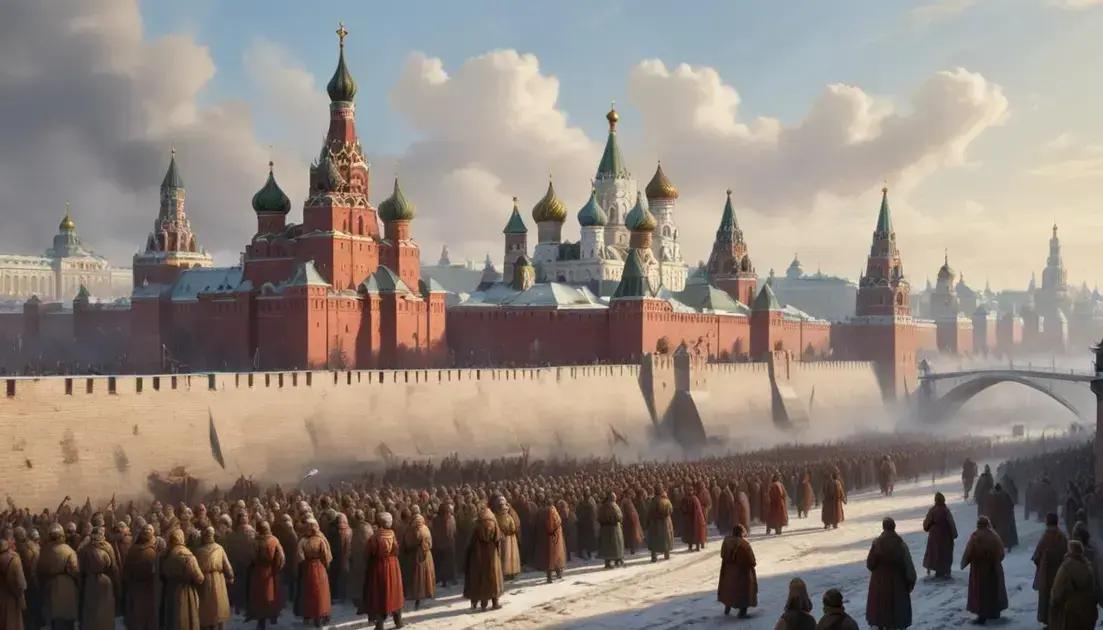
Moscow faced many threats, especially from the Mongol Empire. The city had to fortify its defenses. The strong walls helped to protect the people and their way of life.
Alliances and Connections
Forming alliances became essential. Moscow sought relationships with neighboring princes to increase its influence. These alliances helped to create a united front against common enemies.
Political Importance
As Moscow gained strength, it also became a political hub. The leaders established a clear authority. This was important for unifying the various regions of Russia.
By the end of the 15th century, Moscow was asserting itself as a key player. It laid the groundwork for what would become the Russian state.
The Role of Alliances in Expansion
Alliances played a key role in Moscow’s expansion during its early years. Partnerships with nearby regions helped strengthen the city’s position.
Building Relationships
Moscow sought to build strong ties with neighboring princes. These relationships were based on mutual respect and interests. They often required negotiations and compromises to ensure stability.
Military Support
Allies provided crucial military support during conflicts. When Moscow faced enemies, allied forces helped defend the city. This cooperation made Moscow a tougher opponent.
Economic Benefits
Through alliances, Moscow enhanced its economy. Shared trade routes with allies meant access to new markets. This trade could bring wealth and resources to the city.
Cultural Exchange
Alliances also allowed for cultural exchange. They introduced new ideas, customs, and practices. This interaction helped shape Moscow’s identity as a culture grew.
Over time, these alliances built a network that supported Moscow’s growth. They laid the groundwork for a more united region and set the stage for future power.
Wars and Conflicts that Shaped Moscow
Moscow’s history is marked by various wars and conflicts. Each conflict played a significant role in shaping the city and its future.
The Mongol Invasion
The Mongol invasion in the 13th century was one of the first major conflicts. It led to years of domination, but it also strengthened Moscow’s resolve. The city learned valuable lessons in defense and unity during this time.
Wars for Independence
As Moscow grew, it fought for independence from Mongol rule. Leaders like Dmitry Donskoy rallied the people. The victory in the Battle of Kulikovo in 1380 was a turning point and inspired courage.
Territorial Expansion
In the 15th and 16th centuries, Moscow expanded its territory through wars against neighboring regions. Conflicts with the Grand Duchy of Lithuania and the Polish-Lithuanian Commonwealth were common. These wars helped Moscow increase its land and influence.
The Time of Troubles
The early 17th century brought a period known as the Time of Troubles. This was marked by civil strife and foreign invasion. It weakened the state, but it also pushed for change and expansion.
Through all these conflicts, Moscow transformed. Each war taught the leaders and citizens important lessons in strength, unity, and identity.
The Transition to an Empire
The transition to an empire marked a crucial change in Moscow’s history. It didn’t happen overnight, but through a series of key events.
Consolidating Power
In the late 15th century, rulers began to consolidate power. Ivan III, also known as Ivan the Great, played a vital role. He united various territories and reduced foreign control. This helped Moscow gain authority over surrounding lands.
Diplomatic Strategies
Diplomacy was essential during this time. Ivan made marriages to create alliances. These alliances strengthened Moscow’s position and expanded its reach.
Expansion Through Wars
The empire expanded by conquering neighboring regions. Wars against the Tartars and other principalities increased Moscow’s size. Each victory added new lands and resources.
Impact of Culture
Cultural influences also shaped this transition. The adoption of Orthodox Christianity solidified identity. Churches and cathedrals became symbols of unity and strength.
By the early 16th century, Moscow was no longer just a city. It was becoming the center of a powerful empire, influencing all of Russia.
Conclusion
In conclusion, the rise of Moscow into an empire was a remarkable journey filled with challenges and triumphs. The strong alliances formed, the pivotal wars fought, and the cultural shifts all played essential roles in this transformation. Moscow’s leaders worked hard to unify the land and defend its people. Their efforts led to a rich history that shaped Russia as we know it today.
Understanding this journey helps us appreciate the resilience and determination of those who laid the foundation for a powerful empire. Each step taken was crucial for the growth of Moscow and its identity. As we reflect on this history, we can see how past events continue to influence the present.