The secret war beneath the sea
The future of underwater warfare will see advanced submarines and drones utilizing cutting-edge technology. As nations enhance their maritime capabilities, the emphasis on stealth and autonomous systems will shape tactics. Innovations like artificial intelligence will improve decision-making and intelligence analysis, making underwater operations more effective. Control of the seas remains crucial for global power dynamics as military strategies evolve beneath the waves.
Underwater warfare is a captivating field that strikes a chord with those intrigued by stealth, strategy, and the silent depths of the ocean. Have you ever wondered what lies beneath the waves in these mysterious battles?
The History of Underwater Warfare
The history of underwater warfare is fascinating and complex. It dates back to ancient times when boats were used for battles at sea. However, it wasn’t until World War I that submarines became widely important. These shadowy vessels would silently sneak up on enemy ships, making them a game changer in naval warfare.
Early Developments
In the early 1900s, submarines were still developing. They were not very reliable and often faced challenges in combat. But inventors kept working on designs to improve them. By the time World War I began, countries like Germany used submarines, or U-boats, effectively against their enemies.
World War II Advancements
World War II saw huge advancements in submarine technology. Nations built stronger and faster submarines. With improved sonar systems, these underwater giants could spot ships much easier. Submarines played significant roles in major battles, sinking thousands of enemy vessels.
The Cold War Era
During the Cold War, underwater warfare became even more critical. The arms race between superpowers meant that submarines were armed with nuclear weapons. This changed the face of naval strategy, with submarines now posing threats from hidden depths.
The rivalry pushed nations to develop advanced submarines capable of remaining submerged for extended periods. The stealth and power of these submarines changed how countries approached warfare.
Modern Underwater Warfare
Today, underwater warfare is not just about submarines. It includes advanced technologies like unmanned underwater vehicles (UUVs) and torpedoes. Modern navies combine these technologies to maintain a strategic edge. They help patrol oceans and protect national interests hidden beneath the waves.
Understanding the history of underwater warfare helps us appreciate the ongoing advancements in marine technology. These innovations will continue to shape naval tactics in the future.
The Technology of Naval Submarines
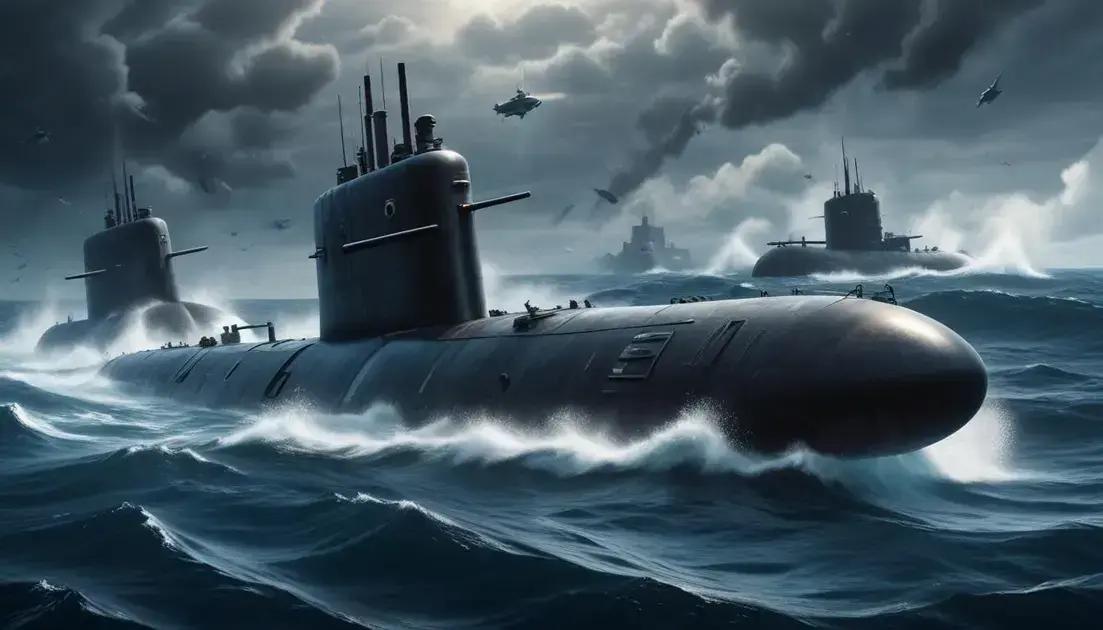
The technology of naval submarines has come a long way. These underwater vessels are engineered for stealth and power. Today’s submarines use advanced technology to navigate and fight in the ocean depths.
Engine Design
Modern submarines have powerful engines that allow them to move silently underwater. This is crucial for avoiding enemy detection. Many submarines also use diesel-electric batteries. These systems recharge when surfacing or using engines. This design makes them efficient and effective.
Sonar Technology
Sonar, which stands for Sound Navigation and Ranging, is key for submarines. This technology helps submarines find and track other vessels. Sonar systems send out sound waves and listen for echoes. By analyzing these sounds, they can map surroundings.
Stealth Features
Stealth is vital in submarine technology. Engineers design submarines to minimize noise and disturbance. Many submarines use special materials that absorb sound. This makes them harder to detect by sonar systems.
Weaponry Systems
Submarines are equipped with various weapons. They often carry torpedoes and sometimes missiles. These weapons give submarines a strong offensive capability. Some advanced submarines can even launch ballistic missiles from underwater. This increases their strategic importance.
Navigation and Control Systems
Navigation systems in submarines are highly advanced. They rely on GPS and inertial navigation. These systems allow submarines to travel accurately, even underwater. Pilots can guide these massive ships with precision.
The continual advancement of technology means submarines will keep evolving. They will adapt to new warfare techniques, making them even more effective.
Major Naval Conflicts Under the Sea
Major naval conflicts under the sea have shaped history significantly. These battles often determine control over oceans and trade routes. The impact of these underwater confrontations can be far-reaching.
World War I Submarine Warfare
During World War I, submarine warfare changed naval tactics. Germany’s U-boats targeted enemy supply ships. These stealthy attacks caused great losses, leading to new naval strategies. The battles transformed how countries viewed submarine power.
World War II U-Boat Campaigns
World War II saw fierce undersea battles, especially in the Atlantic. German U-boats wreaked havoc on Allied shipping. The Allies responded by deploying convoys and using anti-submarine warfare techniques. This major conflict showcased the importance of submarine technology.
Cold War Submarine Standoffs
During the Cold War, tensions escalated beneath the waves. The U.S. and the Soviet Union built powerful fleets of submarines. They often engaged in cat-and-mouse games, trying to outsmart each other. The risk of nuclear confrontation loomed large throughout this period.
Modern Conflicts and Naval Strategy
In recent years, naval conflicts continue to evolve. Nations invest heavily in submarine technology and underwater warfare strategies. Conflicts in regions like the South China Sea have highlighted the importance of submarines in modern warfare.
Military exercises now include anti-submarine warfare drills, showing the ongoing significance of underwater battles. The history of these conflicts shows how they shape global power dynamics.
Future of Warfare Beneath the Waves
The future of warfare beneath the waves looks exciting and complex. As technology advances, submarines will become even more important. Countries are investing heavily in new underwater capabilities.
Emerging Technologies
New technologies will reshape naval warfare. Autonomous underwater vehicles (AUVs) are becoming common. These smart machines can gather information without human crew members. AUVs help in surveillance and reconnaissance missions.
Advanced Submarines
Future submarines will be faster and stealthier. They will use advanced materials that reduce noise. This makes them harder to detect. New propulsion systems will allow them to travel greater distances underwater.
Underwater Drones
Drones will play a vital role in future underwater operations. They can explore areas too dangerous for submarines. These drones can gather intelligence and even carry out attacks.
Integration of AI
Artificial Intelligence (AI) will change underwater warfare too. AI can analyze data quickly and make decisions on the spot. This helps submarines to operate more effectively. AI technology will also improve training and simulations for naval forces.
Geopolitical Implications
The shift in underwater warfare affects global politics. Nations with strong submarine fleets will have a significant advantage. Control of key waterways will be vital for power and influence.
As technology and tactics evolve, naval warfare will shift under the waves. Future conflicts will likely see submarines leading the charge in maritime strategy.
Conclusion
In conclusion, the future of warfare beneath the waves promises to be dynamic and impactful. As nations invest in advanced submarines, drones, and AI, the landscape of naval conflict is changing. These technologies will enhance stealth, speed, and intelligence-gathering capabilities.
Understanding these trends is essential for nations looking to maintain a strategic advantage. Control of the seas will be vital for security and influence in a rapidly evolving world. With submarines and underwater drones playing crucial roles, the future of undersea warfare is both exciting and imperative to follow.