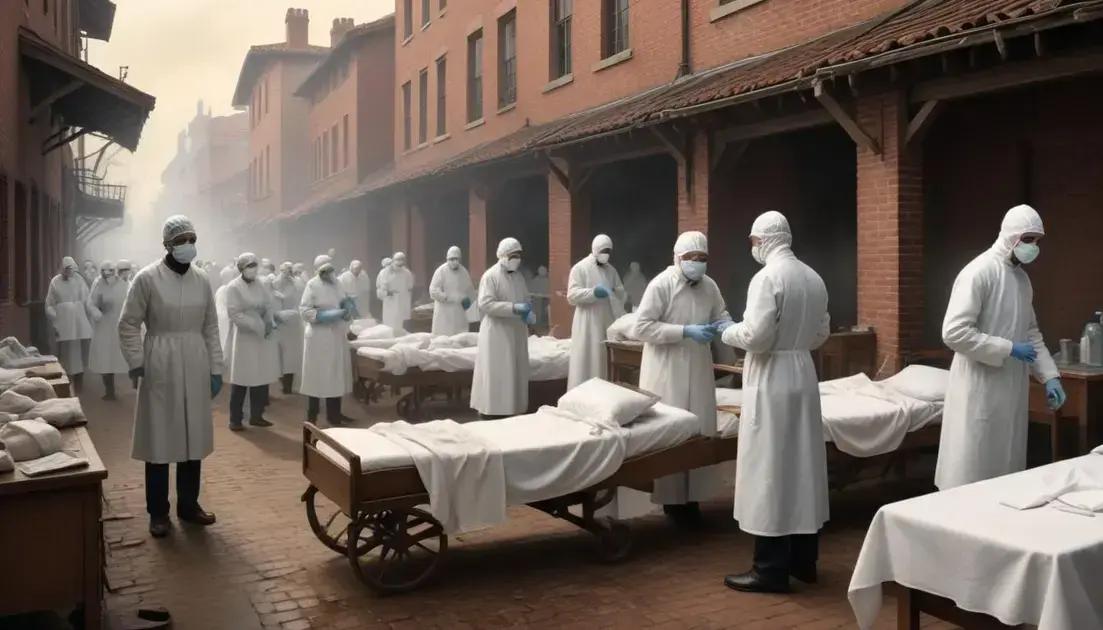
The Spanish Flu: the deadliest pandemic in modern history
The Spanish Flu pandemic significantly impacted global health, leading to major lessons in preparedness and public health improvements. It highlighted the importance of community support and rapid scientific advancements, particularly in vaccine development. Understanding these key takeaways helps us better prepare for future health crises, emphasizing the value of strong healthcare systems and effective communication in managing pandemics.
Have you ever wondered about the Spanish Flu, the deadliest pandemic in modern history? This outbreak not only claimed millions of lives but also transformed the landscape of medicine. Join us as we explore its far-reaching effects.
Introduction to the Spanish Flu
The Spanish Flu hit the world hard in 1918. It spread quickly, affecting many people across the globe. Unlike other diseases, it targeted healthy individuals, making it especially deadly.
This flu was caused by an H1N1 virus. At the time, doctors didn’t know much about viruses. They struggled to understand how it spread and how to stop it.
Basic health practices like washing hands were not common. Public spaces became breeding grounds for the virus. Crowded places, like theaters and schools, saw a rise in cases.
The pandemic led to millions of deaths worldwide. It is estimated that about one-third of the world’s population became infected. This made it one of the deadliest pandemics in history.
Many nations faced chaos as health systems collapsed. Hospitals were overwhelmed with sick patients. To combat the spread, cities imposed quarantines and closed public spaces.
By studying the Spanish Flu, we can learn valuable lessons for today’s health crises. Understanding how it impacted societies can help us prepare for future outbreaks.
Impact on global health
The Spanish Flu had a huge impact on global health. It changed how people viewed sickness and healthcare. Before the pandemic, many countries didn’t have strong health systems.
This flu showed just how unprepared the world was for a health crisis. Hospitals became overwhelmed with patients needing care. Medical staff worked around the clock to help.
One major change was how diseases were tracked. Health officials began to understand the need for better disease reporting. They realized they needed to share information quickly to combat the flu.
Public health measures became more important. Governments introduced new guidelines to keep people safe. These included quarantine, which meant keeping sick people away from healthy ones.
The pandemic also highlighted the importance of vaccines. While no vaccines existed for the Spanish Flu at the time, the need for them was clear. This sparked future research into vaccines for other diseases.
In the years that followed, many nations improved their healthcare systems. Investing in healthcare became a priority. Lessons learned from the Spanish Flu helped shape public health policies worldwide.
Societal changes due to the pandemic
The Spanish Flu didn’t just affect health; it changed society in many ways. Families faced loss as loved ones fell ill or died. This created a sense of fear in communities everywhere.
People started to view public spaces differently. Crowded places like markets, schools, and theaters became places to avoid. People began to appreciate staying home more than ever.
Working from home became more popular. Many businesses had to adapt quickly. Employees did their jobs remotely to reduce the risk of getting sick. This shift paved the way for future work-from-home opportunities.
Schools also closed for long periods. This meant students missed in-person classes. Teachers had to find new ways to engage students while they learned from home.
Social gatherings changed significantly. People learned to celebrate events online through video calls. While it was hard, it brought creativity into how families stayed connected.
The pandemic highlighted the importance of community support. Neighbors helped each other, whether by running errands or just checking in. This fostered a sense of unity during difficult times.
Medical advancements post-pandemic
The Spanish Flu sparked many medical advancements after the pandemic. It showed how unprepared we were for such crises. This led to a big push in scientific research and public health.
One key improvement was in vaccines. While there was no vaccine for the Spanish Flu, the crisis inspired new research. Scientists realized the importance of developing vaccines quickly.
Public health systems also saw major changes. Many countries created organizations to better prepare for future pandemics. These bodies worked on reporting diseases and implementing health policies.
Medical education changed too. Schools began teaching more about infectious diseases. Doctors learned how to recognize and treat these illnesses effectively. This saved many lives in the long run.
Better communication became crucial. Health officials started sharing information rapidly. This helped communities understand how to protect themselves from illnesses.
Hospital care also improved. Facilities became better equipped to handle outbreaks. They focused on infection control measures to keep patients safe.
Overall, the lessons from the Spanish Flu reshaped medicine. They provided valuable insights into how to handle future outbreaks.
Lessons learned and historical significance
The Spanish Flu taught the world many valuable lessons. One major lesson was about the importance of preparedness. Countries realized they needed to be ready for future health crises.
This pandemic highlighted the need for strong public health systems. Governments invested in better healthcare and disease tracking. They learned that quick responses can save lives.
Another important lesson was the power of community. During the flu, people came together to support one another. Neighbors helped each other with groceries and care, creating a sense of unity.
The historical significance of the Spanish Flu also lies in its impact on science. It led to advancements in research on viruses and vaccines. Today, scientists still reference the Spanish Flu when tackling new diseases.
Additionally, this pandemic changed social behaviors. People became more aware of hygiene practices, like handwashing. These practices continue to be important in modern health guidelines.
Overall, understanding the Spanish Flu helps us prepare for future pandemics. The lessons learned are crucial in shaping global health strategies.
Conclusion
In conclusion, the Spanish Flu was a significant event that reshaped our understanding of health and medicine. It taught us valuable lessons about being prepared for future pandemics. Strengthening public health systems and emphasizing community support can make a big difference.
We also learned how important it is to invest in scientific research. The advancements in medicine and vaccines that followed the Spanish Flu have helped protect us today. By remembering the impact of this pandemic, we can better prepare for any health crisis that may come our way.
Ultimately, learning from history helps us create a healthier, safer future for everyone. Keeping these lessons in mind is crucial for both individuals and governments as we face challenges ahead.